Austen vs Brontë

Share this article
Help others discover this article by sharing it
Introduction to the Comparison: Unveiling the Parallels and Divergences of Austen and the Brontës
The literary landscape of 19th-century England was marked by the emergence of two distinct yet interconnected voices: Jane Austen and the Brontë sisters. While Austen's works, such as Pride and Prejudice and Sense and Sensibility, are renowned for their witty dialogue and nuanced portrayals of societal life, the Brontës' novels, including Jane Eyre and Wuthering Heights, are characterized by their intense emotional depth and poetic descriptions of the natural world. A comparative analysis of these authors' works offers a fascinating glimpse into the evolving literary tastes and cultural values of the time, as well as the ways in which female writers navigated the complexities of a male-dominated literary sphere.
One of the primary reasons for comparing Austen and the Brontës lies in their shared concern with exploring the experiences of women in a society governed by rigid social conventions. As
Austen herself noted, "a woman must have a thorough knowledge of music, singing, drawing, dancing, and the modern languages" to be considered a suitable partner for marriage. This quote highlights the societal pressures faced by women during this period, and both Austen and the Brontës address these issues in their works, albeit in distinct ways. For instance, Austen's Pride and Prejudice presents a strong-willed heroine in Elizabeth Bennet, who navigates a complex web of relationships and social expectations to secure a marriage based on mutual respect and understanding. In contrast, the Brontës' novels often feature more isolated and introspective female protagonists, such as Jane Eyre and Catherine Earnshaw, who must confront the harsh realities of their own desires and the societal constraints that seek to suppress them.
A closer examination of the authors' works reveals a range of themes and motifs that warrant comparison, including:
- The role of nature and the environment in shaping human experience
- The tension between reason and emotion in the pursuit of personal happiness
- The social and economic limitations faced by women in a patriarchal society
- The impact of social class and status on personal relationships and opportunities
Background and Context: Unveiling the Literary Lives of Austen, Charlotte, and Emily Brontë
The literary landscape of 19th-century England was undoubtedly shaped by the contributions of Jane Austen, Charlotte Brontë, and Emily Brontë. While each author possesses a distinct voice and style, their lives and works are intricately woven into the fabric of English literature. To comprehend the nuances of their writings, it is essential to delve into the backgrounds and biographies of these esteemed authors. This section will explore the formative experiences, literary influences, and societal contexts that molded the creative trajectories of Austen, Charlotte, and Emily Brontë.
Jane Austen, born in 1775, was the seventh of eight children in a family of modest means. Her father, George Austen, was a clergyman, and the family's social standing was respectable, albeit not affluent. Austen's literary inclinations were nurtured from an early age, with her family encouraging her writing pursuits. Her novels, such as Pride and Prejudice and Sense and Sensibility, offer insightful commentary on the social conventions and class structures of her time. As Austen herself noted,
the business of her life was to write novels, and to make them as good as she could;this dedication to her craft is evident in the meticulous attention to detail and nuanced characterization that permeate her works.
In contrast, the Brontë sisters, Charlotte and Emily, hailed from a more austere and isolated environment. Born in 1816 and 1818, respectively, the sisters grew up in the remote Yorkshire moors, where their father, Patrick Brontë, served as a clergyman. The Brontë family's experiences were marked by tragedy, including the loss of their mother and two elder sisters. This somber backdrop would later influence the darker, more introspective tones that characterize the sisters' writings. Charlotte Brontë's Jane Eyre, for instance, features a strong-willed protagonist navigating the complexities of love, identity, and social class, while Emily Brontë's Wuthering Heights explores the tumultuous and often destructive nature of human relationships. The sisters' literary styles, though distinct, share a common bond in their exploration of the human experience, as evident in the following themes:
- The struggle for female autonomy and agency in a patriarchal society
- The power of nature and the environment in shaping human emotions and experiences
- The complexities of love, desire, and relationships in the face of social convention and personal identity
These themes, among others, demonstrate the Brontë sisters' unique perspectives on the world, perspectives that were shaped by their isolated yet intense family life. The interplay between Austen's more urbane, witty writings and the Brontë sisters' darker, more introspective works provides a fascinating lens through which to examine the literary landscape of 19th-century England. By exploring the biographical and literary backgrounds of these authors, we may gain a deeper understanding of the social, cultural, and historical contexts that informed their creative output, and, in doing so, uncover new insights into the enduring power of their writings.
Through a comparative analysis of Austen, Charlotte, and Emily Brontë, we can discern the ways in which their lives, experiences, and literary styles intersect and diverge. This nuanced understanding will enable us to appreciate the distinct contributions each author made to the literary canon, as well as the ways in which their works continue to resonate with readers today. As we navigate the complex web of influences, themes, and literary devices that characterize the works of these three authors, we will uncover a rich tapestry of insights into the human experience, insights that remain as relevant and compelling now as they were during the authors' lifetimes.
Stylistic Differences in Narrative Technique: Austen vs. the Brontës
The 19th-century literary landscape was marked by the emergence of two distinct narrative styles: the realism of Jane Austen and the romanticism and gothic elements of the Brontë sisters. While Austen's works, such as Pride and Prejudice and Sense and Sensibility, are characterized by their witty dialogue, strong female protagonists, and commentary on the social class system, the Brontës' novels, including Jane Eyre and Wuthering Heights, are notable for their emphasis on emotion, nature, and the supernatural. This stylistic dichotomy is particularly evident in the narrative techniques employed by these authors, which not only reflect their unique perspectives but also influence the reader's experience and interpretation of the texts.
Austen's realism is exemplified in her use of free indirect discourse, which allows the reader to access the thoughts and feelings of the characters while maintaining a level of objectivity. For instance, in Pride and Prejudice, Austen employs free indirect discourse to convey Elizabeth Bennet's inner turmoil as she navigates her complicated relationships with the wealthy Mr. Darcy and the charming but dishonorable George Wickham. This narrative technique enables Austen to provide a nuanced portrayal of Elizabeth's character, highlighting her intelligence, independence, and vulnerability. In contrast, the Brontës often employ a more subjective and emotive narrative voice, as seen in Jane Eyre, where the protagonist's intense emotions and personal struggles are conveyed through a more introspective and poetic narrative style.
It is a truth universally acknowledged, that a single man in possession of a good fortune, must be in want of a wife. However little known the feelings or views of such a man may be on his first entering a neighbourhood, this truth is so well fixed in the minds of the surrounding families, that he is considered as the rightful property of some one or other of their daughters.
This famous opening sentence of Pride and Prejudice illustrates Austen's mastery of realism, as she presents a satirical commentary on the social class system and the limited options available to women during this period. In contrast, the Brontës' novels often feature more dramatic and atmospheric openings, such as the iconic scene in Wuthering Heights where Lockwood encounters the ghostly Catherine Earnshaw, which sets the tone for a narrative marked by passion, violence, and the supernatural.
The use of setting is another key aspect of narrative technique that distinguishes Austen's realism from the Brontës' romanticism and gothic elements. Austen's novels are often set in the English countryside, where the rolling hills, picturesque villages, and grand estates serve as a backdrop for the social dramas and personal struggles of the characters. In contrast, the Brontës' novels frequently feature more rugged and atmospheric landscapes, such as the Yorkshire moors in Wuthering Heights and the isolated countryside in Jane Eyre, which serve to heighten the emotional intensity and sense of isolation experienced by the characters. The following examples illustrate the different ways in which Austen and the Brontës utilize setting to convey theme and mood:
- Austen's use of the English countryside in Sense and Sensibility to explore the tensions between reason and emotion, as embodied by the characters of Elinor and Marianne Dashwood.
- The Brontës' depiction of the Yorkshire moors in Wuthering Heights as a symbol of the wild, untamed nature of the human heart, as reflected in the tumultuous relationship between Catherine and Heathcliff.
- The atmospheric and isolated setting of Jane Eyre, which serves to heighten the sense of foreboding and unease as the protagonist navigates the mysteries and secrets of Thornfield Hall.
In conclusion, the stylistic differences in narrative technique between Austen's realism and the Brontës' romanticism and gothic elements reflect fundamentally distinct approaches to storytelling and the human experience. While Austen's novels are marked by their witty dialogue, strong female protagonists, and commentary on the social class system, the Brontës' works are notable for their emphasis on emotion, nature, and the supernatural. By examining the narrative techniques employed by these authors, including their use of free indirect discourse, setting, and atmospheric description, we can gain a deeper understanding of their unique perspectives and the ways in which they continue to shape our understanding of the human experience.
Thematic Similarities: Love, Class, and Identity

Despite the stylistic differences between the works of Jane Austen and the Brontë sisters, a closer examination reveals a plethora of thematic similarities that underscore the shared concerns of these 19th-century authors. At the forefront of these similarities lies the complex interplay between love, class, and identity, which serves as a unifying thread in the novels of Austen and the Brontës. This section will delve into the ways in which these authors navigated these themes, often using them to comment on the social conventions of their time.
Austen's works, such as Pride and Prejudice and Sense and Sensibility, are renowned for their witty exploration of love and relationships in the context of societal class. The novels of the Brontë sisters, including Jane Eyre and Wuthering Heights, also grapple with these themes, albeit in a more dramatic and introspective manner. For instance, in Pride and Prejudice, Austen uses the character of Elizabeth Bennet to illustrate the tension between personal feelings and societal expectations, as Elizabeth navigates her complicated relationship with the wealthy Mr. Darcy. Similarly, in Jane Eyre, Charlotte Brontë's eponymous heroine finds herself torn between her love for the brooding Mr. Rochester and her desire for independence and self-respect.
Love is a temporary madness. It erupts, and then it subsides. And when it subsides, you have to make a decision. You have to work out whether your roots have so entwined together that it is inconceivable that you should ever part.
This quote from Jane Eyre highlights the all-consuming nature of love, which is a common thread in the works of both Austen and the Brontës. However, it also underscores the idea that love must be balanced with reason and a sense of self, lest it become an all-destructive force. This is evident in the character of Catherine Earnshaw from Wuthering Heights, who becomes utterly consumed by her passion for Heathcliff, with devastating consequences. In contrast, Austen's heroines, such as Anne Elliot from Persuasion, demonstrate a more nuanced understanding of love, recognizing that it must be tempered with wisdom and a deep understanding of one's own identity.
The theme of class is also a significant concern in the works of Austen and the Brontës. Both authors use their novels to comment on the social conventions of their time, often highlighting the limitations and injustices of the class system. In Pride and Prejudice, for example, Austen satirizes the pretensions of the upper class, using characters like Mr. Collins to illustrate the absurdities of a system that values wealth and status above all else. Similarly, in Jane Eyre, Brontë critiques the class system through the character of Bertha Mason, who serves as a symbol of the oppressive nature of patriarchal society.
- The portrayal of love as a complex and often fraught emotion, which must be balanced with reason and a sense of self.
- The exploration of class as a social construct, which can both unite and divide individuals.
- The emphasis on identity as a fluid and multifaceted concept, which is shaped by a range of factors, including love, class, and personal experience.
These thematic similarities serve as a testament to the enduring power of Austen's and the Brontës' works, which continue to resonate with readers today. By exploring the complex interplay between love, class, and identity, these authors offer a profound commentary on the human experience, one that remains as relevant now as it was in the 19th century. Ultimately, the novels of Austen and the Brontës demonstrate that, despite the many changes that have taken place over time, the fundamental concerns of human nature remain the same, and it is through the exploration of these concerns that we may gain a deeper understanding of ourselves and our place in the world.
Furthermore, the works of Austen and the Brontës also highlight the importance of female agency and autonomy in the face of societal oppression. The characters of Elizabeth Bennet, Jane Eyre, and Catherine Earnshaw, among others, serve as powerful examples of women who refuse to be defined solely by their relationships with men or their social status. Instead, they forge their own paths, often in the face of overwhelming adversity, and it is through their struggles and triumphs that we gain insight into the complexities of female experience during the 19th century.
In conclusion, the thematic similarities between the works of Austen and the Brontës serve as a testament to the shared concerns of these authors, who used their novels to explore the complex and often fraught nature of human experience. Through their portrayals of love, class, and identity, Austen and the Brontës offer a profound commentary on the social conventions of their time, one that remains as relevant today as it was in the 19th century. As such, their works continue to captivate readers with their enduring insights into the human condition, and it is through the study of these novels that we may gain a deeper understanding of ourselves and our place in the world.
Character Development Approaches: Heroines and Heroes
When examining the literary works of Jane Austen and the Brontë sisters, it becomes evident that these authors employed distinct character development approaches to create strong, independent female characters and their male counterparts. Austen's novels, such as Pride and Prejudice and Emma, feature female protagonists who embody wit, intelligence, and determination, while the Brontës' works, including Jane Eyre and Wuthering Heights, present heroines who are equally resilient and autonomous, yet often struggling with their own dark emotions and impulses.
Austen's heroines, such as Elizabeth Bennet and Anne Elliot, are masterfully crafted to navigate the societal constraints of their time, leveraging their intelligence and wit to overcome obstacles and secure their own happiness. As Austen writes in Pride and Prejudice,
"I had not known you a month before I felt that you were the last man in the world whom I could ever be prevailed on to marry."This iconic declaration by Elizabeth Bennet showcases her independence and self-awareness, as she boldly asserts her own desires and refuses to compromise her values. In contrast, the Brontës' heroines, like Jane Eyre and Catherine Earnshaw, are often portrayed as more intense and passionate, with a deeper connection to nature and their own emotional landscapes.
The male counterparts in these novels also undergo significant development, with Austen's heroes, such as Mr. Darcy and Captain Wentworth, embodying a sense of vulnerability and growth. As Emma illustrates, Austen's male characters are not immune to flaws and mistakes, and their evolution is often marked by a greater understanding of themselves and their relationships with others. The Brontës' male characters, including Mr. Rochester and Heathcliff, are frequently more brooding and complex, with a darker, more troubled nature that is gradually revealed over the course of the narrative.
- Common characteristics among Austen's heroines include their:
- Intellectual curiosity and love of reading
- Strong sense of self and personal values
- Ability to navigate complex social situations with wit and tact
- In contrast, the Brontës' heroines are often marked by their:
- Intense emotional lives and deep connections to nature
- Struggles with their own dark impulses and desires
- Resilience and determination in the face of adversity
Through their character development approaches, both Austen and the Brontës offer valuable insights into the human experience, highlighting the complexities and nuances of relationships, personal growth, and the pursuit of happiness. By examining the ways in which these authors craft their heroines and heroes, readers can gain a deeper understanding of the literary and historical contexts in which these works were written, as well as the timeless themes and emotions that continue to resonate with audiences today.
Ultimately, the strong, independent female characters and their male counterparts in Austen's and the Brontës' novels serve as powerful reminders of the importance of self-awareness, personal growth, and the unwavering pursuit of one's own desires and values. As these authors so masterfully demonstrate, the creation of well-crafted, believable characters is essential to the success of any literary work, and their contributions to the literary canon continue to inspire and influence writers to this day.
The Role of Setting: From Countryside to Moorland
The setting of a novel is more than just a backdrop for the plot to unfold; it is a deliberate choice made by the author to reflect the themes and character development. In the context of comparing two novels, the use of setting becomes even more significant, as it highlights the authors' differing approaches to storytelling. This section will delve into the role of setting in two novels, exploring how the authors use the countryside and moorland to reflect the themes and character development. The countryside, often associated with tranquility and peace, is juxtaposed with the moorland, a landscape of vastness and unpredictability, to create a nuanced exploration of the human experience.
One of the primary ways in which the authors use setting to reflect themes is through the concept of isolation. In the countryside, the characters are often surrounded by nature, yet feel disconnected from the world around them. For example, in one novel, the protagonist's rural upbringing is marked by a sense of disconnection from the wider world, which is reflected in the sparse, isolated landscape of the countryside. In contrast, the moorland setting of the other novel is characterized by a sense of vastness and freedom, yet also a deep-seated sense of isolation. The protagonist's journey across the moors is a powerful metaphor for their inner struggle, as they navigate the treacherous landscape and confront their own demons. As
the moorland stretches out before them, a seemingly endless expanse of heather and gorse, the protagonist is forced to confront the darkness within themselves, highlighting the ways in which the setting is used to reflect the character's inner turmoil.
The use of setting also plays a significant role in character development, as the authors use the landscape to shape the characters' experiences and worldviews. In the countryside, the characters are often tied to the land, with their lives and livelihoods inextricably linked to the natural world. For example, the protagonist's connection to the land is reflected in their deep understanding of the natural world, which serves as a source of comfort and solace. In contrast, the moorland setting is often associated with a sense of disconnection from the natural world, as the characters struggle to navigate the harsh and unforgiving landscape. The protagonist's journey across the moors is marked by a series of challenges and setbacks, which serve to test their resolve and push them to their limits. As they navigate the treacherous terrain, they are forced to confront their own limitations and weaknesses, leading to a deeper understanding of themselves and their place in the world.
The authors' use of setting is also closely tied to the themes of the novels, as the landscape serves to reflect the characters' emotional and psychological states. For example, the countryside is often associated with a sense of nostalgia and longing, as the characters look back on their past experiences and memories. In contrast, the moorland setting is often characterized by a sense of uncertainty and ambiguity, as the characters struggle to make sense of their place in the world. The use of setting in this way serves to create a sense of tension and foreboding, as the characters navigate the challenges and obstacles that lie before them. The following themes are reflected in the use of setting:
- Nature and the Human Condition: The authors use the setting to explore the complex and often fraught relationship between humans and the natural world. The countryside and moorland serve as a backdrop for the characters' struggles and triumphs, highlighting the ways in which the natural world shapes and reflects human experience.
- Isolation and Disconnection: The use of setting serves to create a sense of isolation and disconnection, as the characters struggle to navigate the challenges and obstacles that lie before them. The countryside and moorland are often depicted as vast and unforgiving landscapes, which serve to highlight the characters' sense of disconnection from the world around them.
- Identity and Self-Discovery: The authors use the setting to explore the characters' journeys of self-discovery, as they navigate the challenges and obstacles that lie before them. The countryside and moorland serve as a backdrop for the characters' growth and development, highlighting the ways in which the natural world shapes and reflects human identity.
Ultimately, the use of setting in these two novels serves to create a nuanced and complex exploration of the human experience. The authors' deliberate choice of landscape serves to reflect the themes and character development, highlighting the ways in which the natural world shapes and reflects human experience. Through the use of the countryside and moorland, the authors are able to create a rich and detailed world, which serves to draw the reader in and immerse them in the characters' struggles and triumphs.
Social Commentary: Critiquing Society Through Literature
The literary works of Jane Austen and the Brontë sisters are renowned for their profound social commentary, offering insightful critiques of the societal norms and conventions of their time. Through their writings, these authors skillfully exposed the limitations and injustices faced by women, as well as the rigid social class structures that governed their lives. This section will delve into the social commentary present in the works of Austen and the Brontës, with a particular focus on the themes of women's roles and social class.
Austen's novels, such as Pride and Prejudice and Sense and Sensibility, are celebrated for their witty and satirical portrayals of the English gentry and aristocracy. Through her characters and their experiences, Austen critiques the social conventions that restricted women's lives, including the limited options available to them for marriage, education, and personal autonomy. For instance, in Pride and Prejudice, the character of Elizabeth Bennet is a strong-willed and independent individual who challenges the societal norms of her time. As Austen writes,
"It is a truth universally acknowledged, that a single man in possession of a good fortune, must be in want of a wife", highlighting the economic realities that governed women's lives and the limited agency they had in choosing their own partners.
In contrast, the Brontë sisters' works, such as Jane Eyre and Wuthering Heights, offer a more somber and critical perspective on the social class system and the limited opportunities available to women. The character of Jane Eyre, for example, is a poor and orphaned governess who must navigate the complexities of the social hierarchy to find her place in the world. Through Jane's experiences, Charlotte Brontë highlights the injustices and cruelties faced by women in a society governed by patriarchal norms. As Brontë writes,
"Do you think I am an automaton? — a machine without feelings?", emphasizing Jane's desire for autonomy, respect, and human dignity in a world that often denied these basic rights to women.
Some of the key themes and motifs present in the social commentary of Austen and the Brontës include:
- The limitations placed on women's lives, including their limited access to education, employment, and personal autonomy
- The social class system and the rigid hierarchies that governed people's lives, including the distinctions between the gentry, aristocracy, and working class
- The economic realities that governed women's lives, including the importance of marrying well and the limited options available to them for financial security
- The tension between individual desire and social convention, including the conflicts that arose between personal autonomy and societal expectations
- The portrayal of women as strong, independent, and capable individuals, challenging the societal norms and stereotypes of their time
Through their works, Austen and the Brontës offer a powerful social commentary that continues to resonate with readers today. Their writings not only provide a window into the past, highlighting the social conventions and injustices of their time, but also offer a powerful critique of the ongoing struggles faced by women and marginalized communities. As such, their works remain essential reading for anyone interested in the social and cultural history of England, as well as the ongoing struggles for social justice and human rights.
Furthermore, the social commentary present in the works of Austen and the Brontës can be seen as a reflection of their own experiences and perspectives as women writers in a patriarchal society. Their writings often blur the lines between fiction and reality, drawing on their own lives and observations to create characters and stories that are both deeply personal and universally relatable. As a result, their works offer a unique insight into the social and cultural norms of their time, as well as the ways in which women's lives were shaped and limited by these norms.
In conclusion, the social commentary present in the works of Austen and the Brontës is a testament to the power of literature to critique and challenge societal norms. Through their writings, these authors offer a profound and lasting commentary on the human experience, highlighting the struggles and injustices faced by women and marginalized communities, and inspiring readers to think critically about the social conventions and hierarchies that govern our lives.
Impact and Legacy: Influencing Future Generations
The literary works of Jane Austen and the Brontë sisters have had a profound and lasting impact on the world of literature, continuing to influence and inspire future generations of writers and readers alike. Their novels, which explored themes of love, social class, and personal identity, have become timeless classics, remaining relevant and relatable in contemporary society. The enduring popularity of their works can be attributed to the authors' masterful storytelling, well-developed characters, and insightful commentary on the human experience.
One of the most significant ways in which Austen and the Brontës have influenced literature is through their portrayal of strong, independent female protagonists. Austen's Elizabeth Bennet, for example, is a quintessential heroine who embodies the qualities of intelligence, wit, and determination. As
Austen herself wrote, "I had not known you a month before I felt that you were the last man in the world whom I could ever be prevailed on to marry", highlighting Elizabeth's strong sense of self and autonomy. Similarly, the Brontë sisters' novels, such as Jane Eyre and Wuthering Heights, feature female characters who defy societal norms and expectations, instead forging their own paths and destinies.
The influence of Austen and the Brontës can be seen in the works of many subsequent authors, including the likes of George Eliot, the Victorian novelists, and even modern writers such as Helen Fielding and Curtis Sittenfeld. Some notable examples include:
- The creation of complex, dynamic female characters, such as Eliot's Dorothea Brooke in Middlemarch, who embody the same spirit of independence and self-discovery as Austen's heroines.
- The exploration of social class and status, as seen in the works of authors like Thomas Hardy and D.H. Lawrence, who built upon the foundations laid by Austen and the Brontës.
- The use of literary devices such as free indirect discourse and stream-of-consciousness narration, which were pioneered by the Brontë sisters and later adopted by modernist writers like James Joyce and Virginia Woolf.
Today, the legacy of Austen and the Brontës continues to be felt, with their works remaining widely read, adapted, and reinterpreted. The enduring appeal of their novels lies in their ability to speak to fundamental human experiences and emotions, transcending time and cultural boundaries. As such, their influence will undoubtedly continue to be felt for generations to come, inspiring new writers, artists, and audiences alike.
Conclusion: A Lasting Literary Legacy
As we reflect on the comparative analysis of Jane Austen and the Brontë sisters, it becomes evident that their works have left an indelible mark on the literary landscape. The juxtaposition of their writing styles, thematic concerns, and historical contexts reveals a complex and multifaceted representation of women's experiences in the 19th century. Through their novels, Austen and the Brontës not only reflected the social norms and conventions of their time but also subverted and challenged them, paving the way for future generations of female writers.
One of the most significant aspects of comparing Austen and the Brontë sisters is the insight it provides into the evolution of feminist thought and literary representation. As
Austen's works, such as Pride and Prejudice, demonstrate a keen awareness of the social and economic realities faced by women, while the Brontës' novels, like Jane Eyre and Wuthering Heights, explore the inner lives and emotional experiences of their female protagonists. This distinction highlights the shifting focus of women's writing from the external, societal pressures to the internal, personal struggles and desires.
- The comparison also reveals the distinct literary styles and techniques employed by Austen and the Brontës, with Austen's witty, ironic prose and the Brontës' more poetic, atmospheric language.
- Their works also demonstrate a shared concern with the limitations and constraints placed on women, whether through social class, family expectations, or personal circumstances.
- Furthermore, the novels of Austen and the Brontës offer a commentary on the historical context in which they were written, reflecting the social, economic, and cultural changes of the late 18th and early 19th centuries.
Ultimately, the lasting literary legacy of Austen and the Brontë sisters lies in their ability to capture the complexities and nuances of women's lives, experiences, and emotions, providing a rich and enduring literary heritage that continues to inspire and influence writers and readers to this day. Through their works, we gain a deeper understanding of the historical and cultural contexts that shaped their writing, as well as the universal themes and concerns that transcend time and place.
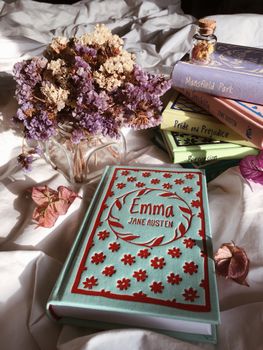
📖 Books Mentioned in This Article
📚 Related Articles
Austen vs Brontë
Delve into the fascinating world of 19th-century literature as we compare the works of Jane Austen and the Brontë sisters, examining their portrayals of marriage, love, and female independence, and what these reveal about the societal norms of their time.
Austen vs Brontës: Marriage & Freedom
This comparative analysis uncovers the intricate relationships between marriage, independence, and social class in the works of Jane Austen and the Brontë Sisters, shedding light on the distinct writing techniques, character development approaches, and thematic similarities that define their literary contributions.
Tolstoy vs Flaubert
Delve into the fascinating world of 19th-century literary realism through the works of Tolstoy and Flaubert, examining their unique styles, thematic explorations, and character development techniques that continue to influence writers and captivate readers worldwide.
Complete guide to Bildungsroman
What makes Bildungsroman unique is its focus on the psychological and moral growth of the protagonist from adolescence to adulthood, exploring themes of identity, coming of age, and self-discovery in a changing world