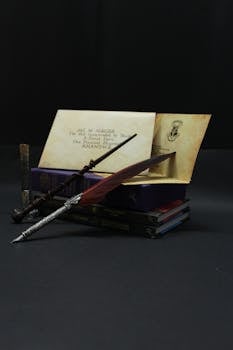
These examples demonstrate the epistolary novel's ability to adapt to different historical contexts, themes, and literary styles, making it a versatile and enduring genre that continues to captivate readers and inspire authors today.
💡Key Takeaways
1.Other notable authors and works have contributed to the development of the epistolary novel over time. Some examples include:
Introduction to Epistolary Novel: Unveiling the Genre's Fascinating History and Characteristics
The epistolary novel, a literary genre that has been fascinating readers for centuries, is a unique and captivating form of storytelling that has evolved significantly over time. At its core, the epistolary novel is a narrative composed of a series of documents, often in the form of letters, diaries, or other personal correspondence, which collectively unfold the story. This distinctive format allows authors to experiment with non-linear narrative structures, multiple narrative voices, and a range of literary techniques, resulting in a rich and immersive reading experience.
Key Points:
One of the key characteristics of the epistolary novel is its use of multiple narrative voices, which can create a sense of polyphony and complexity.
Other notable examples of epistolary novels include:.
Other notable authors and works have contributed to the development of the epistolary novel over time.
Samuel Richardson's Pamela (1740), considered one of the first epistolary novels, exemplifies this trend.
As the epistolary novel evolved, it began to take on new forms and themes.
The epistolary novel is a unique literary genre that tells a story through a series of documents, such as letters, diaries, and newspaper articles, offering a fresh perspective on storytelling and character development, as seen in classics like Dracula and The Color Purple, which have captivated readers with their innovative narrative structures
Read more →
Discover the unique characteristics of epistolary novels, from their origins to modern adaptations, and understand what makes this literary genre so enduring and influential, with a focus on Dracula and The Color Purple
Read more →
What makes Epistolary Novel unique is its narrative structure, composed of letters, diaries, and other documents, offering a personal and intimate perspective on the story, as seen in examples like Dracula and The Color Purple, which have captivated readers with their innovative storytelling and deep character insights
Read more →
Origating in the 18th century, the epistolary novel has its roots in the tradition of letter-writing, which was a popular form of communication during the Enlightenment period. Authors such as Samuel Richardson, with his groundbreaking novel Pamela (1740), and Jean-Jacques Rousseau, with his influential work Julie, or the New Heloise (1761), pioneered the epistolary genre, using it to explore themes of love, morality, and social class. As the genre evolved, it continued to attract notable authors, including Mary Shelley, whose iconic novel Frankenstein (1818) features a series of letters that frame the monster's haunting narrative.
The epistolary novel's unique format allows authors to create a sense of intimacy and immediacy, drawing readers into the inner lives of the characters and creating a sense of complicity in the narrative.
One of the key characteristics of the epistolary novel is its use of multiple narrative voices, which can create a sense of polyphony and complexity. This is evident in novels such as Dracula (1897) by Bram Stoker, which features a range of documents, including letters, diaries, and newspaper articles, to tell the story of the vampire's terrifying exploits. Other notable examples of epistolary novels include:
The Colour Purple (1982) by Alice Walker, which uses a series of letters to explore the experiences of African American women in the early 20th century
The Historian (2005) by Elizabeth Kostova, which features a range of documents, including letters, diaries, and historical accounts, to tell the story of Dracula's origins
The Guernsey Literary and Potato Peel Pie Society (2008) by Mary Ann Shaffer, which uses a series of letters to explore the experiences of islanders during the German occupation of Guernsey during World War II
These examples demonstrate the epistolary novel's ability to adapt to different historical contexts, themes, and literary styles, making it a versatile and enduring genre that continues to captivate readers and inspire authors today.
The Historical Development of Epistolary Novel
The epistolary novel, a genre characterized by its use of letters, diaries, and other documents to tell a story, has undergone significant transformations since its emergence in the 18th century. This literary form, which originated as a means of exploring the inner lives of characters, has evolved over time, influenced by the social, cultural, and historical contexts in which it was written. From its early beginnings to the present day, the epistolary novel has been shaped by notable authors and works that have contributed to its development, including Samuel Richardson's Pamela and Jean-Jacques Rousseau's Julie.
Photo by Matej on Pexels
One of the key factors that contributed to the rise of the epistolary novel in the 18th century was the growing literacy rate and the increasing popularity of letter-writing as a means of communication. As more people became literate, the art of letter-writing became a staple of social interaction, and authors began to explore its potential as a literary device. Samuel Richardson's Pamela (1740), considered one of the first epistolary novels, exemplifies this trend. The novel, which tells the story of a young servant girl's attempts to resist the advances of her employer, consists entirely of letters, allowing the reader to experience the characters' thoughts and feelings in a highly personal and intimate way.
The epistolary form allowed Richardson to create a sense of immediacy and authenticity, drawing the reader into the world of the novel and creating a sense of emotional investment in the characters' lives.
As the epistolary novel evolved, it began to take on new forms and themes. Jean-Jacques Rousseau's Julie (1761), for example, uses the epistolary form to explore the complexities of human relationships and the nature of love. The novel, which consists of a series of letters exchanged between the protagonist, Julie, and her lover, Saint-Preux, is notable for its innovative use of the epistolary form to create a sense of psychological depth and complexity. The use of letters allows Rousseau to explore the inner lives of his characters, revealing their thoughts, feelings, and motivations in a highly nuanced and detailed way.
Other notable authors and works have contributed to the development of the epistolary novel over time. Some examples include:
The Coquette (1797) by Hannah Webster Foster, which uses the epistolary form to explore the social conventions and moral values of the late 18th century
Dracula (1897) by Bram Stoker, which employs the epistolary form to create a sense of suspense and horror
The Color Purple (1982) by Alice Walker, which uses the epistolary form to explore the experiences of African American women in the early 20th century
Today, the epistolary novel continues to evolve, incorporating new forms and themes into its narrative structure. The use of digital technologies, such as email and text messaging, has opened up new possibilities for the epistolary form, allowing authors to explore the ways in which technology is changing the way we communicate and interact with each other. As a literary genre, the epistolary novel remains a powerful tool for exploring the human condition, offering a unique perspective on the inner lives of characters and the social, cultural, and historical contexts in which they live.
Techniques and Conventions of Epistolary Novel
The epistolary novel, a genre that has been in existence since the 18th century, has been a fascinating mode of storytelling, offering a unique blend of intimacy, immediacy, and complexity. This genre, characterized by its use of letters, diaries, and other documents as a narrative device, has been employed by authors to explore a wide range of themes, styles, and techniques. In this section, we will delve into the literary devices and narrative strategies employed in epistolary novels, with a particular focus on the use of multiple narrators, non-linear storytelling, and the blurring of reality and fiction, as exemplified in Bram Stoker's Dracula and Alice Walker's The Color Purple.
One of the most distinctive features of the epistolary novel is its use of multiple narrators, each with their own unique voice, perspective, and biases. This technique allows authors to create a rich, multifaceted narrative that is both fragmented and cohesive. In Dracula, for example, Stoker employs a range of narrators, including Jonathan Harker, Mina Murray, and Dr. Seward, to tell the story of the vampire's invasion of England. Each narrator brings their own distinct perspective to the narrative, creating a sense of depth and complexity that would be impossible to achieve with a single narrator. As Stoker writes,
"The horror of the situation was becoming more and more apparent, and I could see that the others were beginning to realize it too"
, highlighting the ways in which the multiple narrators work together to build tension and suspense.
Another key technique employed in epistolary novels is non-linear storytelling. By presenting events out of chronological order, authors can create a sense of suspense, surprise, and intrigue, drawing the reader into the narrative and refusing to let them go. In The Color Purple, Walker uses a non-linear narrative structure to explore the life of Celie, a young black woman growing up in the rural South. The novel is composed of a series of letters, each of which offers a glimpse into Celie's life at a particular moment in time. As the narrative unfolds, the reader is able to piece together the events of Celie's life, creating a sense of narrative that is both fragmented and coherent. The use of non-linear storytelling also allows Walker to explore themes of memory, identity, and the power of storytelling, as Celie reflects on her past and struggles to make sense of her present.
The epistolary novel also often blurs the line between reality and fiction, creating a sense of uncertainty and ambiguity that draws the reader into the narrative. In Dracula, for example, the novel's use of diaries, letters, and newspaper articles creates a sense of historical authenticity, drawing the reader into the world of the novel and refusing to let them go. As the narrator writes,
"I have been asked to write an account of the events that occurred during my stay at the castle, and I have endeavored to do so as accurately and truthfully as possible"
, highlighting the ways in which the novel's use of documentary evidence creates a sense of realism and authenticity. Similarly, in The Color Purple, Walker's use of letters and diary entries creates a sense of intimacy and immediacy, drawing the reader into Celie's inner world and refusing to let them go.
The use of multiple narrators creates a sense of depth and complexity, allowing authors to explore a range of themes and perspectives.
Non-linear storytelling creates a sense of suspense, surprise, and intrigue, drawing the reader into the narrative and refusing to let them go.
The blurring of reality and fiction creates a sense of uncertainty and ambiguity, drawing the reader into the narrative and challenging them to distinguish between what is real and what is not.
In conclusion, the epistolary novel is a unique and fascinating genre, offering a range of literary devices and narrative strategies that allow authors to explore complex themes and ideas. Through the use of multiple narrators, non-linear storytelling, and the blurring of reality and fiction, authors such as Bram Stoker and Alice Walker are able to create rich, complex narratives that draw the reader in and refuse to let them go. As we continue to explore the techniques and conventions of the epistolary novel, we are reminded of the power of storytelling to shape our understanding of the world and ourselves, and the ways in which the epistolary form can be used to create innovative, engaging, and thought-provoking narratives.
Major Works and Authors in Epistolary Novel: A Critical Examination
The epistolary novel, a genre characterized by its use of letters, diaries, and other documents to narrate a story, has been a staple of literary fiction for centuries. This genre has been employed by a diverse range of authors to explore various themes, experiment with narrative techniques, and create complex, multi-voiced narratives. In this section, we will delve into an in-depth analysis of significant epistolary novels, including Bram Stoker's Dracula, Alice Walker's The Color Purple, Mary Shelley's Frankenstein, and Wilkie Collins's The Moonstone, which have not only helped shape the genre but also pushed its boundaries and conventions.
One of the most iconic examples of an epistolary novel is Bram Stoker's Dracula, which tells the story of the vampire Count Dracula through a series of letters, diaries, and newspaper articles. The use of multiple narrative voices and documents allows Stoker to create a sense of realism and immediacy, drawing the reader into the world of the novel. As
the character of Mina Harker notes, "the pages of my diary, which I have kept since the beginning of this terrible story, will serve as a record of the events that have occurred"
, highlighting the importance of written records in the novel. This technique also enables Stoker to explore the theme of the power of writing and documentation in shaping our understanding of reality.
In contrast, Alice Walker's The Color Purple employs the epistolary form to explore the inner life and experiences of its protagonist, Celie. The novel consists of a series of letters written by Celie to God, which serve as a means of self-expression and a way to cope with the hardships and injustices she faces. As Celie writes,
"I'm poor, black, I may be ugly, but dear God, I'm here, I'm here, I'm here"
, her letters become a powerful expression of her identity and a testament to her resilience. The use of the epistolary form in The Color Purple allows Walker to create a sense of intimacy and immediacy, drawing the reader into Celie's inner world and creating a sense of emotional connection with the protagonist.
Other notable examples of epistolary novels include Mary Shelley's Frankenstein and Wilkie Collins's The Moonstone. Frankenstein tells the story of Victor Frankenstein and his creation through a series of letters and diaries, which serve as a means of exploring the themes of identity, morality, and the dangers of unchecked ambition. As Victor Frankenstein notes,
"I had worked hard for nearly two years, for the sole purpose of infusing life into an inanimate body"
, highlighting the obsessive nature of his pursuit. The use of the epistolary form in Frankenstein allows Shelley to create a sense of depth and complexity, exploring the inner lives and motivations of her characters through their written records.
The Moonstone, on the other hand, is a detective novel that uses the epistolary form to tell the story of a stolen diamond and the subsequent investigation. The novel consists of a series of witness statements, diaries, and letters, which serve as a means of piecing together the events surrounding the theft. As Collins notes,
"the story of the Moonstone is, in itself, a story of mystery and suspense"
, highlighting the use of the epistolary form to create a sense of intrigue and suspense. The use of multiple narrative voices and documents in The Moonstone allows Collins to create a sense of objectivity and detachment, drawing the reader into the world of the novel and creating a sense of engagement with the mystery.
Photo by John-Mark Smith on Pexels
Some of the key characteristics of the epistolary novel include:
The use of multiple narrative voices and documents, such as letters, diaries, and newspaper articles, to create a sense of complexity and depth.
The exploration of themes such as identity, morality, and the power of writing and documentation.
The creation of a sense of realism and immediacy, drawing the reader into the world of the novel.
The use of the epistolary form to experiment with narrative techniques and push the boundaries of the genre.
In conclusion, the epistolary novel is a rich and diverse genre that has been employed by a range of authors to explore various themes and narrative techniques. Through a critical examination of significant epistolary novels such as Dracula, The Color Purple, Frankenstein, and The Moonstone, we can gain a deeper understanding of the genre and its conventions, as well as the ways in which it continues to evolve and shape literary fiction. As a literary device, the epistolary form offers a unique perspective on the human experience, allowing authors to create complex, multi-voiced narratives that engage and challenge readers.
The Impact of Epistolary Novel on Literary History
The epistolary novel, a literary genre characterized by its use of letters, diaries, and other documents to narrate a story, has had a profound impact on the development of literary movements throughout history. From its inception in the 18th century, the epistolary novel has influenced the trajectory of literary genres, including Romanticism and Modernism, and continues to shape contemporary literature. The epistolary novel's unique narrative structure, which allows for multiple perspectives and subjective interpretations, has enabled authors to experiment with innovative storytelling techniques and explore complex themes.
The epistolary novel's influence on Romanticism is evident in the works of authors such as Samuel Richardson and Jean-Jacques Rousseau. Richardson's Pamela (1740) and Rousseau's Julie, or the New Heloise (1761) exemplify the epistolary novel's ability to explore the inner lives and emotions of characters, which became a hallmark of Romantic literature. The use of letters and diaries in these novels allowed authors to create intimate and personal narratives that focused on the individual's emotional experience, paving the way for the Romantic movement's emphasis on emotion, imagination, and the sublime.
The epistolary novel's impact on Modernism is equally significant. Authors such as James Joyce and Virginia Woolf experimented with the epistolary form, incorporating letters, diary entries, and other documents into their novels to create complex, fragmented narratives. Joyce's Ulysses (1922) and Woolf's Mrs. Dalloway (1925) demonstrate the epistolary novel's influence on Modernist experimentation with narrative structure and the representation of consciousness. The use of multiple narrative voices and subjective perspectives in these novels reflects the epistolary novel's ability to capture the disjointedness and fragmentation of modern life.
The epistolary novel's influence can be seen in the work of contemporary authors, who continue to experiment with the form and push its boundaries.
In contemporary literature, the epistolary novel remains a vital and dynamic genre. Authors such as Margaret Atwood and David Mitchell have used the epistolary form to explore complex themes and create innovative narratives. Atwood's The Handmaid's Tale (1985) and Mitchell's Cloud Atlas (2004) demonstrate the epistolary novel's continued relevance in contemporary literature. These novels use the epistolary form to explore issues such as power, identity, and the human condition, reflecting the genre's ability to capture the complexity and diversity of human experience.
The use of multiple narrative voices and subjective perspectives in epistolary novels allows for a nuanced exploration of complex themes and issues.
The epistolary novel's emphasis on the individual's emotional experience and inner life has influenced the development of literary movements such as Romanticism and Modernism.
The genre's ability to capture the disjointedness and fragmentation of modern life has made it a popular choice for authors exploring the human condition in contemporary literature.
In conclusion, the epistolary novel has had a profound impact on literary history, influencing the development of literary movements such as Romanticism and Modernism, and continuing to shape contemporary literature. Its unique narrative structure and ability to capture the complexity and diversity of human experience have made it a vital and dynamic genre that remains relevant today.
Modern Adaptations and Reinterpretations of Epistolary Novel
The epistolary novel, a literary genre that originated in the 18th century, has undergone significant transformations in modern media, including film, television, and digital formats. This genre, characterized by the use of letters, diaries, and other documents to narrate a story, has been reimagined and reinterpreted in innovative ways, offering new possibilities for storytelling and narrative experimentation. The epistolary novel's unique structure, which allows for multiple narrative voices and non-linear storytelling, has made it an attractive format for modern adaptations and reinterpretations.
In film, for example, the epistolary novel has been adapted into successful movies such as Dear John (2010) and The Lake House (2006), which use letters and other documents to tell romantic stories. These films demonstrate how the epistolary format can be used to create a sense of intimacy and immediacy, drawing the audience into the narrative. Similarly, in television, shows like Dr. Horrible's Sing-Along Blog (2008) and House of Cards (2013-2018) have used the epistolary format to create complex, multi-layered narratives that explore themes of identity, power, and morality.
In digital formats, the epistolary novel has been reinterpreted in even more innovative ways. Web series like The Lizzie Bennet Diaries (2012-2013) and Emma Approved (2013-2014) have used video blogs, social media, and other digital platforms to retell classic novels in modern settings. These adaptations demonstrate how the epistolary format can be used to create immersive, interactive narratives that engage audiences in new and innovative ways. Furthermore, interactive fiction platforms like Choice of Games and Tin Man Games have allowed readers to become active participants in the narrative, making choices that shape the story and its outcome.
The epistolary novel's ability to experiment with narrative structure and voice has made it a fascinating genre for modern adaptations and reinterpretations. By embracing new media and formats, authors and creators can push the boundaries of storytelling, creating innovative and engaging narratives that appeal to diverse audiences.
The use of multiple narrative voices and non-linear storytelling allows for complex, multi-layered narratives that explore themes of identity, power, and morality.
The epistolary format can be used to create a sense of intimacy and immediacy, drawing the audience into the narrative.
Digital platforms and interactive fiction have enabled new forms of reader engagement, allowing audiences to become active participants in the narrative.
Overall, the modern adaptations and reinterpretations of the epistolary novel demonstrate the genre's versatility and potential for innovation. By embracing new media and formats, authors and creators can continue to experiment with narrative structure and voice, pushing the boundaries of storytelling and engaging audiences in new and innovative ways.
Conclusion: The Enduring Significance of Epistolary Novel
The epistolary novel, a genre that has been a cornerstone of literary innovation since the 18th century, continues to captivate audiences and inspire writers with its unique blend of intimacy, immediacy, and metafictional complexity. Despite the advent of new technologies and narrative forms, the epistolary novel remains a dynamic and resilient genre, capable of adapting to changing cultural and historical contexts. One of the key reasons for its enduring significance is its ability to replicate the rhythms and textures of human communication, whether through letters, diaries, emails, or social media posts. This is evident in works such as Dracula by Bram Stoker, which uses a collage of letters, diaries, and newspaper articles to create a sense of urgency and immediacy, drawing the reader into the heart of the narrative.
The influence of the epistolary novel can also be seen in popular culture, with many contemporary authors and creators drawing on its conventions and techniques to craft innovative and engaging stories. For example, the Guernsey Literary and Potato Peel Pie Society by Mary Ann Shaffer and Annie Barrows uses a series of letters to explore the experiences of islanders during World War II, while the TV show Dear White People employs a similar epistolary structure to examine issues of racism and identity. As the following examples illustrate, the epistolary novel's impact extends beyond literature to other forms of media:
The Color Purple by Alice Walker, which uses a series of letters to explore the experiences of African American women in the early 20th century
The Perks of Being a Wallflower by Stephen Chbosky, which employs a series of letters to explore the complexities of adolescent identity and belonging
The Brief Wondrous Life of Oscar Wao by Junot Díaz, which uses a blend of letters, diary entries, and footnotes to create a vibrant and energetic narrative voice
The epistolary novel's ability to balance intimacy and distance, immediacy and reflection, makes it an ideal form for exploring complex social and psychological issues, from identity and belonging to power and oppression.
As we look to the future, it is clear that the epistolary novel will continue to evolve and adapt, incorporating new technologies and narrative forms to create innovative and engaging stories. With its unique blend of intimacy, immediacy, and metafictional complexity, the epistolary novel remains a vital and dynamic genre, capable of captivating audiences and inspiring writers for generations to come. Whether through traditional letters or digital communications, the epistolary novel will continue to provide a powerful tool for exploring the human experience, with all its complexities and nuances.