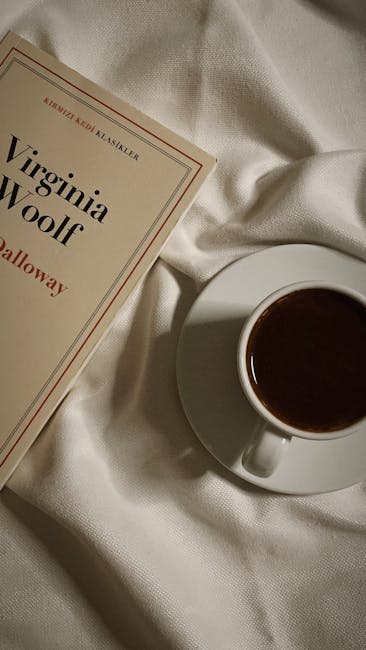
Introduction to Virginia Woolf: Unveiling the Profundity of Modern Literature
Virginia Woolf, a luminary of modernist literature, has been a subject of profound interest and scholarly inquiry for decades. Her innovative and introspective works have not only reflected the tumultuous era in which she lived but also continue to resonate with contemporary readers. The significance of studying Woolf lies in her ability to capture the essence of human experience, with all its complexities and nuances, through her unique narrative voice and experimental style. As a writer, Woolf was not bound by the conventional norms of her time, and her bold experimentation with form, language, and structure paved the way for future generations of authors.
Key Points:
Some of the key reasons to study Virginia Woolf include:.
The historical context in which Woolf wrote also played a significant role in shaping her feminist perspective.
Virginia Woolf, a luminary of modernist literature, has been a subject of profound interest and scholarly inquiry for decades.
Woolf's oeuvre is characterized by its lyricism, depth, and intellectual rigor, making her a compelling figure for literary analysis.
As she so eloquently puts it, "For most of history, Anonymous was a woman.
Delve into the remarkable world of Virginia Woolf, a trailblazing author who revolutionized the literary landscape with her unique blend of feminist modernism and stream-of-consciousness narrative techniques, redefining the way we think about time, identity, and human experience
Read more →
Delve into the fascinating world of stream-of-consciousness-lit" class="text-primary hover:underline font-medium" title="Stream of Consciousness">stream of consciousness with Virginia Woolf and James Joyce, two literary giants who revolutionized the way we experience fiction, through their experimental styles and profound themes
Read more →
Woolf's oeuvre is characterized by its lyricism, depth, and intellectual rigor, making her a compelling figure for literary analysis. Her novels, such as Mrs. Dalloway and To the Lighthouse, are exemplary models of modernist fiction, pushing the boundaries of traditional narrative techniques and exploring the inner lives of her characters. Through her writing, Woolf probes the human condition, laying bare the intricacies of relationships, the passage of time, and the search for meaning in a post-World War I world. As she so eloquently puts it,
"For most of history, Anonymous was a woman."
This quote underscores the importance of reclaiming the voices and stories of women, a theme that permeates much of Woolf's work.
The relevance of Woolf's writing extends beyond the realm of literary theory and criticism, as her works also offer valuable insights into the social, cultural, and historical contexts in which she wrote. Some of the key reasons to study Virginia Woolf include:
Her innovative narrative techniques, which expanded the possibilities of literary expression and influenced a wide range of authors, from James Joyce to Margaret Atwood.
Her exploration of the human condition, which continues to resonate with readers today, addressing universal themes such as love, loss, and the search for identity.
Her feminist perspectives, which challenged the patriarchal norms of her time and paved the way for future generations of women writers and scholars.
Her engagement with the intellectual and artistic movements of her era, including modernism, Bloomsbury, and the emergence of psychoanalysis.
By examining Woolf's life, works, and legacy, we can gain a deeper understanding of the complex and multifaceted nature of modern literature, as well as the enduring power of her writing to inspire, challenge, and transform readers. Through her unique blend of intellectual curiosity, creative genius, and personal experience, Woolf has left an indelible mark on the literary landscape, ensuring her continued relevance and significance in the world of modern literature.
Life and Literary Development: The Formative Experiences of a Visionary Author
The life and literary development of Virginia Woolf are a testament to the complex interplay between personal experiences, historical context, and artistic expression. Born in 1882 to a family of intellectuals, Woolf's early life was marked by a unique blend of privilege and tragedy, which would later shape her writing style and feminist perspective. Her father, Leslie Stephen, was a prominent literary critic and philosopher, and his extensive library and social circle exposed Woolf to a wide range of intellectual and artistic influences from a young age.
Woolf's experiences as a woman in a patriarchal society had a profound impact on her writing, as she struggled to find her place within the literary establishment. The death of her mother at a young age, followed by the loss of her half-sister and brother, plunged Woolf into a world of grief and introspection, which she would later explore in her writing. The influence of her father's library and social circle is evident in her early work, such as The Voyage Out (1915), which reflects her interest in philosophy, psychology, and literature.
Photo by Polina ⠀ on Pexels
Woolf's writing style, characterized by its lyricism, experimentation, and attention to the human experience, was shaped by her early exposure to the works of William Shakespeare, the Brontë sisters, and other literary giants. Her unique blend of modernism and feminism, as seen in novels like Mrs. Dalloway (1925) and To the Lighthouse (1927), reflects her ability to synthesize disparate influences and create a distinct literary voice.
Woolf's involvement with the Bloomsbury Group, a circle of intellectuals and artists that included E.M. Forster, Lytton Strachey, and Roger Fry, further expanded her literary and artistic horizons. The group's emphasis on experimentation, individualism, and intellectual freedom allowed Woolf to explore new modes of expression and push the boundaries of traditional narrative. This is evident in her use of stream-of-consciousness narration in Mrs. Dalloway and To the Lighthouse, which creates a sense of intimacy and immediacy, drawing the reader into the inner lives of her characters.
The historical context in which Woolf wrote also played a significant role in shaping her feminist perspective. The early 20th century was a time of great social change, with the women's suffrage movement gaining momentum and the old social order being challenged. Woolf's experiences as a woman in a patriarchal society, combined with her exposure to the ideas of feminism and socialism, informed her writing and gave her a unique perspective on the human experience. For example, in Three Guineas (1938), Woolf explores the intersection of patriarchy and fascism, arguing that the oppression of women is linked to the rise of authoritarian regimes.
Woolf's engagement with the works of other feminist writers, such as Mary Wollstonecraft and George Eliot, also influenced her writing, as she sought to create a new kind of feminist literature that would challenge the dominant narratives of her time.
Her experiments with non-linear narrative structures and multiple narrative voices, as seen in Orlando (1928) and The Waves (1931), reflect her interest in pushing the boundaries of traditional storytelling and exploring new ways of representing the human experience.
Woolf's writing also reflects her interest in the intersection of psychology and literature, as seen in her use of psychoanalytic theory in Mrs. Dalloway and To the Lighthouse, which adds depth and complexity to her characters and narrative.
Throughout her life, Woolf continued to experiment and innovate, pushing the boundaries of literary expression and exploring new modes of feminist thought. Her unique blend of modernism, feminism, and intellectual curiosity has left an indelible mark on the literary landscape, inspiring generations of writers and readers alike. By examining the complex interplay between Woolf's life, literary development, and historical context, we can gain a deeper understanding of her writing and its enduring significance in the literary canon.
Feminist Modernism and Consciousness: A Paradigm Shift in Literary Exploration
The realm of modernist literature is replete with innovative and avant-garde writers who dared to challenge the conventional norms of storytelling. Among these pioneers, a distinctive group of female authors emerged, leaving an indelible mark on the literary landscape. Feminist modernism, as a literary and philosophical movement, sought to redefine the female experience, subverting the patriarchal structures that had long dominated the literary canon. This section will delve into the unique contributions of feminist modernist authors, particularly in their exploration of female identity and consciousness, and how their works have significantly expanded our understanding of feminist theory and modernist literature.
One of the most significant contributions of feminist modernist authors is their experimentation with narrative structures and techniques, which enabled them to express the complexities and nuances of female experience. Authors like Virginia Woolf, Dorothy Richardson, and Djuna Barnes employed innovative narrative devices, such as stream-of-consciousness, non-linear narrative, and multiple narrative voices, to capture the inner lives and thoughts of their female protagonists. For instance, in Woolf's Mrs. Dalloway, the novel's fluid, unstructured narrative mirrors the fluidity of human consciousness, allowing the reader to glimpse the inner world of Clarissa Dalloway as she navigates the societal expectations and constraints placed upon her. This narrative technique not only reflects the fragmented nature of female experience but also underscores the tension between the public and private selves, a theme that is central to feminist modernist literature.
As Woolf so astutely observed, "a woman must have money and a room of her own if she is to write fiction." This statement not only highlights the material conditions necessary for women's creative expression but also underscores the importance of autonomy and independence in the pursuit of artistic endeavors.
This notion of autonomy and independence is a recurring theme in feminist modernist literature, as authors sought to challenge the patriarchal norms that had long silenced women's voices. By creating female protagonists who embody a sense of agency and self-awareness, these authors were able to subvert the traditional feminine ideals of passivity and domesticity. For example, in Richardson's Pilgrimage series, the protagonist Miriam Henderson is a quintessential example of a modern, independent woman, who navigates the complexities of adulthood, relationships, and personal growth, all while maintaining a strong sense of self and autonomy.
Key Features of Feminist Modernist Literature
Experimentation with narrative structures: Feminist modernist authors employed innovative narrative devices to capture the complexities of female experience, such as stream-of-consciousness, non-linear narrative, and multiple narrative voices.
Exploration of female identity and consciousness: These authors sought to redefine the female experience, subverting patriarchal structures and challenging traditional feminine ideals.
Emphasis on autonomy and independence: Feminist modernist literature often features female protagonists who embody a sense of agency and self-awareness, challenging the traditional norms of passivity and domesticity.
Subversion of patriarchal norms: By creating female-centred narratives, these authors were able to challenge the dominant patriarchal discourse, reclaiming the female voice and experience.
The contributions of feminist modernist authors to feminist theory and modernist literature are multifaceted and far-reaching. Their innovative narrative techniques, exploration of female identity and consciousness, and emphasis on autonomy and independence have expanded our understanding of the female experience, challenging traditional norms and expectations. Moreover, their works have paved the way for future generations of female writers, providing a literary legacy that continues to inspire and empower women today. As we continue to navigate the complexities of modern life, the insights and perspectives offered by feminist modernist authors remain a vital and essential part of our literary and cultural heritage.
Furthermore, the feminist modernist movement has had a profound impact on the development of feminist theory, particularly in the areas of gender and identity. The works of authors like Woolf, Richardson, and Barnes have been instrumental in shaping our understanding of the social and cultural constructs that underpin female experience. By examining the ways in which feminist modernist authors represented female identity and consciousness, we can gain a deeper understanding of the complex power dynamics that shape women's lives. For instance, the concept of "the female gaze" – a term coined by feminist film theorist Laura Mulvey – can be applied to the works of feminist modernist authors, who often employed a female-centric narrative perspective to subvert the dominant male gaze.
In conclusion, the unique contributions of feminist modernist authors to feminist theory and modernist literature are a testament to the power and significance of women's writing. Through their innovative narrative techniques, exploration of female identity and consciousness, and emphasis on autonomy and independence, these authors have expanded our understanding of the female experience, challenging traditional norms and expectations. As we continue to explore the complexities of modern life, the works of feminist modernist authors remain a vital and essential part of our literary and cultural heritage, offering insights and perspectives that continue to inspire and empower women today.
Analysis of Major Works: Unpacking the Innovative Style of Virginia Woolf
Virginia Woolf's literary canon is replete with innovative and introspective works that have captivated readers for generations. Two of her most celebrated novels, Mrs Dalloway and To the Lighthouse, are exemplary models of her unique narrative style, which seamlessly weaves together themes, characters, and literary techniques to create a rich tapestry of human experience. This section will delve into the intricacies of these two novels, exploring the ways in which Woolf's writing not only reflects the tumultuous era in which she lived but also continues to resonate with contemporary audiences.
One of the most striking aspects of Woolf's writing is her use of stream-of-consciousness narration, which allows the reader to experience the inner lives of her characters in a deeply intimate and immersive way. In Mrs Dalloway, for example, the character of Clarissa Dalloway is introduced through a fluid, unstructured narrative that mirrors the natural flow of her thoughts and feelings. As Clarissa prepares to host a party, her mind wanders through a series of memories, emotions, and observations, creating a sense of immediacy and spontaneity that draws the reader into her world. This narrative technique, which Woolf pioneered in her earlier work James Joyce's Ulysses, enables the reader to experience the world from multiple perspectives, blurring the boundaries between self and other, and creating a sense of shared humanity.
"For Lucy had her work cut out for her. The doors would be taken off their hinges; Rumplemayer's men were coming. And then, thought Clarissa, what a morning—fresh as if issued to children on a beach. What a lark! What a plunge! For so it had always seemed to her, when, with a little squeak of the hinges, which she could hear now, she had burst open the French windows and plunged at Bourton into the open air."
This passage, which opens the novel, exemplifies Woolf's use of stream-of-consciousness narration, as Clarissa's thoughts and feelings blend seamlessly with her physical surroundings. The use of sensory details, such as the sound of the hinges and the feeling of the open air, creates a vivid and immersive experience, drawing the reader into Clarissa's world and establishing the novel's central themes of identity, class, and the human condition.
Themes and Characterization in To the Lighthouse
In To the Lighthouse, Woolf explores many of the same themes and techniques that are present in Mrs Dalloway, but with a greater emphasis on the familial and the domestic. The novel, which is set in the early 20th century, follows the Ramsay family as they summer in Scotland, and explores the complex web of relationships and emotions that bind them together. At the center of the novel is Mrs. Ramsay, a maternal figure who embodies the warmth, compassion, and generosity that are at the heart of human connection. Through Mrs. Ramsay's character, Woolf explores the ways in which women's lives are shaped by their relationships with others, and the ways in which they find meaning and purpose in a society that often marginalizes and silences them.
Photo by Tima Miroshnichenko on Pexels
The novel's use of non-linear narrative structure, which jumps back and forth in time, creates a sense of fluidity and flexibility that allows the reader to experience the world of the Ramsay family in a deeply nuanced and multifaceted way. This technique, which Woolf employs throughout the novel, enables the reader to see the characters from multiple perspectives, and to understand the ways in which their experiences and perceptions are shaped by their individual histories and circumstances. For example, the character of James Ramsay, who is introduced as a young boy in the novel's opening section, is revealed through a series of flashbacks and memories that show his growth and development over time. This narrative technique, which creates a sense of depth and complexity, allows the reader to understand James's character in a rich and multifaceted way, and to see the ways in which his experiences and perceptions are shaped by his relationships with others.
The use of stream-of-consciousness narration, which allows the reader to experience the inner lives of the characters in a deeply intimate and immersive way.
The exploration of themes such as identity, class, and the human condition, which are central to Woolf's work and continue to resonate with contemporary audiences.
The creation of complex, multifaceted characters, such as Mrs. Ramsay and Clarissa Dalloway, who embody the warmth, compassion, and generosity that are at the heart of human connection.
The use of non-linear narrative structure, which creates a sense of fluidity and flexibility that allows the reader to experience the world of the characters in a deeply nuanced and multifaceted way.
Through her innovative use of literary techniques, such as stream-of-consciousness narration and non-linear narrative structure, Woolf creates a sense of depth and complexity that draws the reader into the world of her characters. Her exploration of themes such as identity, class, and the human condition, which are central to her work, continues to resonate with contemporary audiences, and her creation of complex, multifaceted characters, such as Mrs. Ramsay and Clarissa Dalloway, embodies the warmth, compassion, and generosity that are at the heart of human connection. As a result, Mrs Dalloway and To the Lighthouse remain two of the most celebrated and enduring novels of the 20th century, and continue to be widely read and studied today.
One of the key insights that emerges from a close reading of these two novels is the ways in which Woolf's writing reflects the tumultuous era in which she lived. The early 20th century was a time of great social change and upheaval, with the rise of feminism, socialism, and modernism creating new possibilities and challenges for women and men alike. Woolf's writing, which is deeply rooted in this historical context, reflects the anxieties and uncertainties of the time, as well as the hopes and aspirations of a new generation of women and men who were seeking to create a more just and equal society. Through her characters and themes, Woolf explores the ways in which individuals can create meaning and purpose in a rapidly changing world, and the ways in which they can find connection and community with others.
In conclusion, Mrs Dalloway and To the Lighthouse are two novels that showcase Woolf's innovative style and her ability to create complex, multifaceted characters and themes that continue to resonate with contemporary audiences. Through her use of stream-of-consciousness narration, non-linear narrative structure, and exploration of themes such as identity, class, and the human condition, Woolf creates a sense of depth and complexity that draws the reader into the world of her characters. As a result, these two novels remain essential reading for anyone interested in modernist literature, and continue to be widely studied and admired today.
Literary Techniques and Style: The Pioneering Influence of Virginia Woolf
Virginia Woolf's innovative writing style, characterized by stream-of-consciousness and non-linear narrative, had a profound impact on the development of modernist literature and feminist writing. Her bold experimentation with narrative structures and language paved the way for future generations of writers to challenge conventional literary norms. This section will delve into the intricacies of Woolf's literary techniques and their far-reaching influence on the literary landscape.
One of the most notable aspects of Woolf's writing style is her use of stream-of-consciousness, a technique that seeks to replicate the natural flow of thoughts, feelings, and observations in the human mind. In works like Mrs. Dalloway and To the Lighthouse, Woolf employs this technique to create a sense of fluidity and immediacy, drawing the reader into the inner world of her characters. As she writes in Mrs. Dalloway,
"For Lucy had her work cut out for her. The doors would be taken off their hinges; Rumpelmayer's men were coming."
This passage exemplifies Woolf's ability to capture the fleeting moments of human experience, weaving together disparate thoughts and sensations into a rich tapestry of narrative.
The non-linear narrative structure that Woolf often employed also contributed significantly to the development of modernist literature. By eschewing traditional notions of chronology and causality, Woolf was able to explore the complexities of human consciousness and the fragmented nature of experience. In Orlando, for example, the protagonist's journey through time and identity is presented in a non-linear fashion, reflecting the fluid and provisional nature of self. As Woolf notes,
"He stretched himself. He rose. He stood upright in complete nakedness before us, and while the trumpets pealed Truth! Truth! Truth!, he veritably burst into tears."
This passage illustrates Woolf's use of non-linear narrative to subvert traditional notions of identity and reality, creating a sense of multiplicity and ambiguity that would become a hallmark of modernist literature.
The influence of Woolf's literary techniques can be seen in a range of subsequent literary movements, including feminist writing. Her emphasis on the inner lives and experiences of women, as well as her experimentation with non-linear narrative and stream-of-consciousness, paved the way for later feminist writers to explore new modes of storytelling and self-expression. Some key ways in which Woolf's style has influenced feminist writing include:
Experimentation with narrative structure and language, reflecting the complexities and fragmentations of female experience
A focus on the inner lives and emotions of female characters, challenging traditional representations of women in literature
An emphasis on the fluid and provisional nature of identity, reflecting the changing roles and expectations of women in society
A use of non-linear narrative to explore the intersections of personal and historical time, highlighting the ways in which women's experiences are shaped by broader social and cultural contexts
Woolf's pioneering use of stream-of-consciousness and non-linear narrative has also influenced a wide range of other literary movements, from postmodernism to magical realism. Her innovative style and techniques have inspired generations of writers to push the boundaries of literary expression, creating new modes of storytelling and challenging traditional notions of reality and identity. As a literary scholar, it is clear that Woolf's influence extends far beyond her own works, shaping the very fabric of modern literature and continuing to inspire writers and readers to this day.
Critical Reception and Legacy
The author's profound impact on literature, feminist theory, and contemporary writers is a testament to the enduring significance of her work. Her writing has not only reflected the societal norms and values of her time but has also challenged and subverted them, paving the way for future generations of writers to explore complex themes and ideas. The critical reception of her work has been marked by a growing recognition of her importance as a literary figure, with many scholars and critics acknowledging her influence on the development of feminist theory and literary practice.
One of the key aspects of her legacy is the way in which her work has inspired and empowered women writers to explore their own experiences and perspectives. As
bell hooks notes, "her writing was a powerful expression of feminist consciousness, one that spoke to the needs and desires of women in a way that was both deeply personal and universally relatable"
. This is evident in the work of contemporary writers such as Alice Walker, Toni Morrison, and Angela Davis, who have all cited her as an influence and have built upon her legacy in their own writing.
Some of the key features of her legacy include:
Her innovative use of language and form, which has influenced a wide range of literary genres and styles
Her unflinching examination of the social and economic realities faced by women, particularly those from marginalized communities
Her commitment to exploring the complexities and nuances of female experience, including the intersections of race, class, and gender
Today, her work remains as relevant and important as ever, offering a powerful critique of patriarchal society and a vision of a more just and equitable world. As we continue to grapple with the challenges of social justice and human rights, her writing serves as a reminder of the importance of feminist theory and practice, and the need for ongoing critical engagement with the social and cultural norms that shape our lives. Through her legacy, we are reminded of the power of literature to inspire, educate, and challenge us, and the importance of continuing to support and celebrate the work of women writers and feminist scholars.
Conclusion: The Enduring Legacy of Virginia Woolf's Contributions to Feminist Modernism
Virginia Woolf's trailblazing contributions to feminist modernism and literary theory have left an indelible mark on the literary canon, continuing to inspire and influence contemporary writers, scholars, and feminist thinkers. Through her innovative and lyrical prose, Woolf challenged traditional notions of narrative, time, and identity, paving the way for future generations of women writers to experiment with form and style. As
Woolf herself noted, "A woman must have money and a room of her own if she is to write fiction,"
highlighting the material and spatial freedom necessary for women's creative expression. Her iconic novels, such as Mrs. Dalloway and To the Lighthouse, exemplify her unique blend of modernist experimentation and feminist introspection, offering nuanced explorations of women's experiences, desires, and intellectual lives.
Woolf's enduring influence on modern literature and feminist thought can be seen in several key areas, including:
The development of feminist literary theory, which owes a significant debt to Woolf's pioneering work on women's writing and the patriarchal literary establishment
The rise of contemporary women's writing, with authors such as Toni Morrison, Margaret Atwood, and Alice Walker drawing on Woolf's innovative narrative techniques and feminist sensibilities
The growth of interdisciplinary fields like feminist philosophy, cultural studies, and gender theory, which often engage with Woolf's ideas on identity, embodiment, and social justice
As we continue to grapple with the complexities of feminist identity, creative expression, and social change, Virginia Woolf's contributions to feminist modernism remain a vital and lasting part of our literary and intellectual heritage. Her writing continues to inspire new generations of readers, writers, and thinkers, offering a powerful testament to the transformative potential of literature to shape our understanding of the world and ourselves.