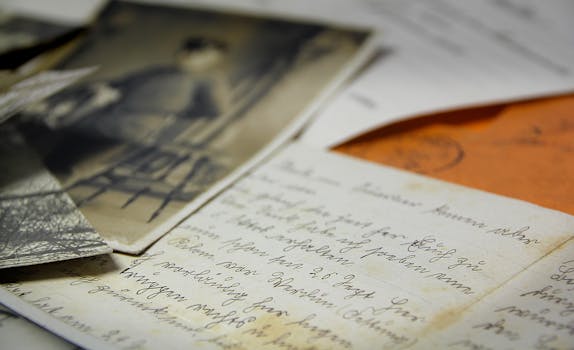
1.Epistolary novels often possess certain characteristics that distinguish them from other forms of literature. Some of the key characteristics of epistolary novels include:
2.The incorporation of modern technology has also enabled writers to experiment with new forms and styles. Some notable examples include:
Introduction to Epistolary Novel: Unveiling the Genre's Definition, Characteristics, and Historical Context
The epistolary novel, a literary genre that has been fascinating readers for centuries, is characterized by its unique narrative structure, comprising a series of letters, diaries, or other documents that weave together to form a cohesive story. This innovative approach to storytelling has captivated authors and audiences alike, allowing for a diverse range of themes, styles, and perspectives to emerge. At its core, the epistolary novel is a genre that thrives on the art of letter-writing, leveraging the intimacy and immediacy of personal correspondence to create a sense of realism and authenticity.
Key Points:
To understand the evolution of this genre, it is essential to delve into its historical beginnings, particularly in 18th-century literature.
Some notable examples of epistolary novels that reflect the social and cultural norms of the 18th century include:.
This seminal work not only paved the way for future epistolary novels but also reflected the social and cultural norms of the time.
Richardson's Pamela tells the story of a young servant girl's resistance to the advances of her aristocratic employer, Mr.
What makes Epistolary Novel unique is its narrative structure, composed of letters, diaries, and other documents, offering a personal and intimate perspective on the story, as seen in examples like Dracula and The Color Purple, which have captivated readers with their innovative storytelling and deep character insights
Read more →
Discover the unique characteristics of epistolary novels, from their origins to modern adaptations, and understand what makes this literary genre so enduring and influential, with a focus on Dracula and The Color Purple
Read more →
Historically, the epistolary novel has its roots in the 18th century, with authors such as Samuel Richardson and Jean-Jacques Rousseau experimenting with this format. Richardson's Pamela, or Virtue Rewarded (1740) is often cited as one of the first epistolary novels, comprising a series of letters that chronicle the life of a young servant girl. This pioneering work laid the groundwork for the genre's evolution, influencing a multitude of authors who would go on to push the boundaries of epistolary storytelling. As the genre developed, it incorporated various forms of documentation, including diaries, newspaper clippings, and even social media posts, to reflect the changing times and technological advancements.
The key characteristics of the epistolary novel are manifold, but some of the most notable include:
Multiple narrative voices, often with distinct perspectives and biases
A non-linear narrative structure, with events unfolding through a series of fragmented and sometimes contradictory accounts
An emphasis on the subjective experience, with characters' thoughts and feelings conveyed through their written words
A sense of immediacy and intimacy, as readers are privy to the characters' innermost thoughts and feelings
As the epistolary novel continues to evolve, it remains a powerful tool for exploring the human condition, allowing authors to experiment with innovative narrative structures and techniques. By embracing the genre's unique characteristics, authors can craft stories that are both deeply personal and universally relatable, speaking to readers across cultures and time.
Through its innovative use of narrative structure and documentation, the epistolary novel has become a versatile and dynamic genre, capable of accommodating a wide range of themes, styles, and perspectives. As we delve into the world of epistolary fiction, it becomes clear that this genre is more than just a literary curiosity – it is a rich and vibrant tapestry, woven from the threads of human experience and imagination. With its ability to capture the complexities and nuances of human emotion, the epistolary novel remains a compelling and thought-provoking genre, one that continues to inspire authors and captivate readers to this day.
The Origins of Epistolary Novel: Unveiling the Historical Beginnings
The epistolary novel, a literary genre characterized by its narrative structure comprising a series of letters, diaries, or other documents, has a rich and fascinating history that spans centuries. To understand the evolution of this genre, it is essential to delve into its historical beginnings, particularly in 18th-century literature. The epistolary novel's roots can be traced back to the works of pioneering writers such as Samuel Richardson, who is often credited with establishing the genre with his novel Pamela, or Virtue Rewarded (1740). This seminal work not only paved the way for future epistolary novels but also reflected the social and cultural norms of the time.
Photo by Samer Daboul on Pexels
Richardson's Pamela tells the story of a young servant girl's resistance to the advances of her aristocratic employer, Mr. B, through a series of letters. The novel's epistolary format allowed Richardson to explore themes of morality, class, and social hierarchy, which were pertinent to the 18th-century English society. The use of letters as a narrative device enabled Richardson to create a sense of intimacy and immediacy, drawing the reader into the inner world of the protagonist. As Richardson himself noted,
"The letters... would give a more lively and natural representation of the characters and their sentiments, than any other method of narration"
. This innovative approach to storytelling influenced a generation of writers, including Frances Burney and Jean-Jacques Rousseau, who also experimented with the epistolary format in their works.
The epistolary novel's popularity in the 18th century can be attributed to its ability to reflect the social and cultural norms of the time. The genre's focus on personal correspondence and private lives resonated with the rising middle class, who were increasingly interested in the minutiae of daily life. The epistolary novel also provided a platform for writers to comment on contemporary issues, such as the role of women in society, the dangers of social climbing, and the corrupting influence of wealth. Some notable examples of epistolary novels that reflect the social and cultural norms of the 18th century include:
Evelina (1778) by Frances Burney, which satirizes the social conventions of the time and explores the challenges faced by a young woman in a patriarchal society
Julie, or the New Heloise (1761) by Jean-Jacques Rousseau, which examines the complexities of love, relationships, and social class in 18th-century France
The Coquette (1797) by Hannah Webster Foster, which critiques the social mores of the American gentry and the limited options available to women
The influence of the epistolary novel can be seen in the many literary works that followed in its footsteps. The genre's innovative narrative structure and focus on personal correspondence have inspired writers across centuries, from the Gothic novels of Ann Radcliffe to the modernist experiments of Virginia Woolf. As a literary genre, the epistolary novel continues to captivate readers with its unique blend of intimacy, immediacy, and social commentary, offering a window into the past while remaining relevant to contemporary concerns.
Key Elements of Epistolary Novel
The epistolary novel, a literary genre that has been in existence since the 18th century, is characterized by its unique narrative structure, which is composed of a series of documents, such as letters, diary entries, and newspaper articles. This genre has been employed by authors to tell a wide range of stories, from Gothic horror to social justice, and has been used to explore complex themes and ideas. Two notable examples of epistolary novels are Bram Stoker's Dracula and Alice Walker's The Color Purple, which demonstrate the defining characteristics of this genre, including the use of multiple narrative voices, non-linear storytelling, and the blurring of reality and fiction.
One of the primary characteristics of the epistolary novel is the use of multiple narrative voices, which allows authors to present a diverse range of perspectives and experiences. In Dracula, for example, the story is told through a combination of letters, diary entries, and newspaper articles, which provides the reader with a multifaceted understanding of the events that unfold. The use of multiple narrative voices also enables authors to create complex and nuanced characters, as seen in The Color Purple, where the protagonist, Celie, writes letters to God, which serves as a means of self-expression and reflection. As
Celie's letters to God demonstrate, the epistolary form allows authors to explore the inner lives of their characters, and to create a sense of intimacy and immediacy
.
Another key element of the epistolary novel is non-linear storytelling, which allows authors to play with the chronology of events and to create suspense and tension. In Dracula, the use of letters and diary entries creates a sense of immediacy, as the reader is presented with a series of events that are unfolding in real-time. The non-linear structure of the novel also enables the author to create a sense of mystery and intrigue, as the reader is forced to piece together the events of the story. In contrast, The Color Purple employs a more linear structure, with Celie's letters to God serving as a means of reflection and self-expression. As the novel progresses, the reader is presented with a series of flashbacks and memories, which serves to illuminate Celie's past and to provide context for her present circumstances.
The epistolary novel also often blurs the line between reality and fiction, creating a sense of ambiguity and uncertainty. In Dracula, the use of newspaper articles and other documentary evidence serves to create a sense of realism, and to blur the line between fact and fiction. Similarly, in The Color Purple, the use of letters and other personal documents creates a sense of intimacy and immediacy, and serves to blur the line between the public and private spheres. This blurring of reality and fiction is a hallmark of the epistolary novel, and serves to create a sense of complexity and nuance. Some of the key ways in which the epistolary novel blurs the line between reality and fiction include:
The use of documentary evidence, such as letters, diary entries, and newspaper articles, which serves to create a sense of realism and authenticity
The creation of complex and nuanced characters, who are often presented as flawed and multifaceted
The use of non-linear storytelling, which serves to create a sense of suspense and tension, and to blur the line between past and present
The exploration of themes and ideas that are relevant to the contemporary world, such as social justice, identity, and community
Overall, the epistolary novel is a complex and nuanced genre, which is characterized by its use of multiple narrative voices, non-linear storytelling, and the blurring of reality and fiction. Through the use of letters, diary entries, and other documents, authors are able to create a sense of intimacy and immediacy, and to explore complex themes and ideas. As demonstrated by novels such as Dracula and The Color Purple, the epistolary novel is a powerful and flexible genre, which continues to be relevant and important in the contemporary literary landscape.
Major Works and Authors in Epistolary Novel
The epistolary novel, a genre that has been in existence for centuries, has been a popular medium for writers to explore various themes and ideas. The epistolary form, which involves the use of letters, diaries, or other documents to tell a story, has been employed by many notable authors to create some of the most enduring and influential works of literature. In this section, we will delve into some of the most significant examples of epistolary novels, including Bram Stoker's Dracula, Alice Walker's The Color Purple, and Anne Frank's The Diary of a Young Girl, and examine the ways in which these novels utilize the epistolary form to explore complex themes and ideas.
One of the most iconic examples of an epistolary novel is Bram Stoker's Dracula, which tells the story of the vampire Count Dracula through a series of letters, diaries, and newspaper articles. The use of the epistolary form in Dracula allows Stoker to create a sense of immediacy and intimacy, drawing the reader into the world of the novel and making them feel like they are experiencing the events firsthand. As
"the epistolary form is particularly well-suited to the telling of a story that is both personal and historical, as it allows the writer to create a sense of closeness and immediacy, while also providing a broader historical context"
, notes literary critic, Susan C. Shapiro. The epistolary form also enables Stoker to explore the theme of the "other," as the characters' perceptions of Dracula are shaped by their individual biases and prejudices, highlighting the dangers of xenophobia and the importance of understanding and empathy.
Another notable example of an epistolary novel is Alice Walker's The Color Purple, which tells the story of the struggles of African American women in the rural South during the early 20th century. The novel is composed of a series of letters written by the protagonist, Celie, to her sister Nettie, and later to God, which provides a unique and intimate perspective on the experiences of the characters. The use of the epistolary form in The Color Purple allows Walker to explore the theme of female empowerment and the importance of women's voices being heard. As Walker notes,
"the epistolary form is particularly well-suited to the telling of a story that is both personal and political, as it allows the writer to create a sense of intimacy and immediacy, while also providing a broader social context"
. The novel also highlights the importance of literacy and education as a means of empowerment, as Celie's ability to write and express herself is a key factor in her journey towards independence and self-discovery.
A third example of a notable epistolary novel is Anne Frank's The Diary of a Young Girl, which is a personal and emotional account of the author's experiences during World War II. The diary is a powerful example of the epistolary form, as it provides a unique and intimate perspective on the experiences of the author and her family during a time of great turmoil and upheaval. The use of the epistolary form in The Diary of a Young Girl allows Frank to explore the theme of hope and resilience in the face of adversity, as she and her family struggle to survive in hiding. As Frank notes,
"the diary is a means of escape, a way of transcending the difficulties and hardships of everyday life, and of finding solace and comfort in the written word"
. The diary also highlights the importance of human connection and the need for empathy and understanding, as Frank and her family are forced to confront the harsh realities of war and persecution.
Characteristics of Epistolary Novels
Epistolary novels often possess certain characteristics that distinguish them from other forms of literature. Some of the key characteristics of epistolary novels include:
Photo by Pixabay on Pexels
Intimacy and immediacy: Epistolary novels often create a sense of intimacy and immediacy, as the reader is able to experience the events of the story firsthand through the letters, diaries, or other documents that make up the narrative.
Subjectivity and bias: Epistolary novels often highlight the subjectivity and bias of the characters, as their perceptions and experiences are shaped by their individual perspectives and prejudices.
Historical context: Epistolary novels often provide a broader historical context, as the letters, diaries, or other documents that make up the narrative are often set against a specific historical backdrop.
Thematic resonance: Epistolary novels often explore complex themes and ideas, such as identity, morality, and social justice, which are reinforced through the use of the epistolary form.
In conclusion, the epistolary novel is a unique and powerful form of literature that has been employed by many notable authors to explore complex themes and ideas. The use of the epistolary form in novels such as Dracula, The Color Purple, and The Diary of a Young Girl allows the authors to create a sense of intimacy and immediacy, while also providing a broader historical context and highlighting the importance of human connection and empathy. As these novels demonstrate, the epistolary form is a versatile and expressive medium that continues to influence writers and literary scholars today.
The Evolution of Epistolary Novel Over Time
The epistolary novel, a literary genre characterized by its use of letters, diaries, and other documents to tell a story, has undergone significant transformations over the centuries. From its origins in 18th-century Europe to the present day, the epistolary novel has adapted to changing technological and social landscapes, incorporating new forms of documentary narrative and experimenting with innovative styles. This evolution has not only expanded the possibilities of the genre but also allowed writers to reflect on the nature of communication, identity, and storytelling itself.
One of the key factors driving the evolution of the epistolary novel has been the impact of modern technology. The rise of email, text messaging, and social media has provided writers with a wide range of new documentary forms to explore. For example, novels like The Brief Wondrous Life of Oscar Wao by Junot Díaz combine traditional epistolary techniques with modern technology and slang, creating a unique narrative voice that blends the intimacy of letters with the immediacy of digital communication. As Díaz himself notes,
"the epistolary form allows you to get into the heads of your characters in a way that's very intimate, very personal, and very direct."
This intimacy is heightened by the use of modern technology, which enables characters to communicate in real-time and across vast distances.
The incorporation of modern technology has also enabled writers to experiment with new forms and styles. Some notable examples include:
The Circle by Dave Eggers, which uses a mix of emails, texts, and social media posts to explore the darker side of Silicon Valley culture
The First Bad Man by Miranda July, which combines diary entries, emails, and transcripts to create a surreal and often humorous narrative
The People in the Trees by Hanya Yanagihara, which uses a combination of diary entries, letters, and scientific reports to tell a haunting story of discovery and obsession
These examples demonstrate how the epistolary novel has adapted to the digital age, incorporating new forms of documentary narrative and experimenting with innovative styles. By embracing modern technology and new forms of communication, writers have been able to push the boundaries of the genre, creating fresh and innovative works that reflect the complexities of contemporary life. As the epistolary novel continues to evolve, it will be exciting to see how writers respond to the challenges and opportunities of the digital age, using the genre to explore new themes, styles, and forms of storytelling.
Furthermore, the epistolary novel's evolution has also been influenced by the rise of new forms of narrative, such as the "found document" novel, which uses a collection of documents, such as emails, texts, and social media posts, to tell a story. This form has been used to great effect in novels like The Girls by Emma Cline, which uses a combination of diary entries, letters, and news reports to explore the darker side of 1960s counterculture. The use of these new forms of narrative has enabled writers to create complex, multi-layered stories that reflect the fragmented and often chaotic nature of modern life.
Epistolary Novel's Influence on Modern Media
The epistolary novel, a genre characterized by its use of letters, diaries, and other documents to tell a story, has had a profound impact on modern media. The techniques and themes developed in epistolary novels have been adapted and reinterpreted in various forms of contemporary storytelling, including film, television, and digital media. One notable example is the TV show The Haunting of Hill House, which employs a non-linear narrative structure and multiple narrative voices to tell its story. This approach, reminiscent of epistolary novels like Dracula and Frankenstein, allows the show to explore the complexities of its characters' psyches and relationships.
The influence of the epistolary novel on modern media can be seen in several key areas. Firstly, the genre's focus on character development and psychological insight has led to a greater emphasis on character-driven storytelling in contemporary media. Shows like The Haunting of Hill House and Sharp Objects use non-linear narrative structures and multiple narrative voices to create complex, nuanced characters and explore themes of trauma, memory, and identity. Secondly, the epistolary novel's use of multiple narrative voices and perspectives has influenced the development of modern media's use of unreliable narrators and non-linear storytelling. This can be seen in films like Memento and Shutter Island, which use non-linear narrative structures and unreliable narrators to create suspense and uncertainty.
The epistolary novel's ability to create a sense of intimacy and immediacy has also been influential in the development of modern media. The use of diaries, letters, and other personal documents in epistolary novels creates a sense of direct access to the characters' thoughts and feelings, drawing the reader into their inner world. This technique has been adapted in modern media, with shows like The Handmaid's Tale using voiceovers and inner monologues to create a sense of intimacy and immediacy.
Furthermore, the epistolary novel's influence can be seen in the rise of digital media, with platforms like social media and blogging allowing for new forms of epistolary storytelling. The use of multiple narrative voices and perspectives, as well as the emphasis on character development and psychological insight, have become key features of digital media storytelling. For example, the podcast Serial uses a non-linear narrative structure and multiple narrative voices to tell a true story, while the YouTube series The Lizzie Bennet Diaries uses a vlog format to retell Jane Austen's Pride and Prejudice in a modern setting.
The use of non-linear narrative structures and multiple narrative voices in modern media, as seen in shows like The Haunting of Hill House and Sharp Objects
The emphasis on character development and psychological insight, as seen in films like Memento and Shutter Island
The creation of a sense of intimacy and immediacy, as seen in shows like The Handmaid's Tale and The Lizzie Bennet Diaries
The rise of digital media and new forms of epistolary storytelling, as seen in podcasts like Serial and YouTube series like The Lizzie Bennet Diaries
In conclusion, the epistolary novel's influence on modern media is evident in its use of non-linear narrative structures, multiple narrative voices, and emphasis on character development and psychological insight. The genre's ability to create a sense of intimacy and immediacy has also been influential, with modern media adopting these techniques to create new forms of storytelling. As digital media continues to evolve, it is likely that the epistolary novel's influence will only continue to grow, leading to new and innovative forms of storytelling.
Conclusion: The Enduring Significance of Epistolary Novel
The epistolary novel, a genre that has been a cornerstone of literary innovation since its inception, continues to captivate readers and inspire writers with its unique narrative structures and thematic depth. Despite the evolution of literary forms and styles, the epistolary novel remains a vital and relevant genre, offering a distinct perspective on storytelling and character development that continues to influence writers and literary scholars today. One of the primary reasons for the genre's enduring popularity is its ability to create a sense of intimacy and immediacy, as seen in novels such as Bram Stoker's Dracula, where the use of letters, diaries, and newspaper articles draws the reader into the world of the narrative.
The epistolary novel's innovative narrative structures have also contributed significantly to its enduring influence. For example, the use of multiple narrative voices and perspectives, as seen in Dracula and other epistolary novels, allows for a nuanced and multifaceted exploration of themes and characters. This narrative technique enables writers to experiment with non-linear storytelling, unreliable narrators, and fragmented narratives, which in turn, has influenced the development of other literary genres, such as postmodernism and magical realism. As the literary critic,
Gérard Genette, notes, "the epistolary novel is a genre that is particularly well-suited to the exploration of the complexities of human relationships and the nature of truth and reality."
The use of epistolary narrative structures allows for a high degree of flexibility and experimentation, enabling writers to push the boundaries of traditional narrative forms.
The genre's focus on the individual perspectives and experiences of characters creates a sense of psychological depth and complexity, drawing readers into the inner worlds of the characters.
The epistolary novel's ability to blend fact and fiction, as seen in the use of historical documents and fictional letters, has influenced the development of historical fiction and other genres that seek to blur the lines between reality and fantasy.
In conclusion, the epistolary novel remains a vital and relevant genre, offering a unique perspective on storytelling and character development that continues to influence writers and literary scholars today. Its innovative narrative structures and themes have contributed significantly to its enduring popularity and influence, and its ability to create a sense of intimacy and immediacy has drawn readers into the world of the narrative for centuries. As a genre, the epistolary novel continues to evolve and adapt, incorporating new technologies and narrative forms, such as email, social media, and digital storytelling, ensuring its continued relevance and significance in the literary landscape.