Introduction to the Comparison: Unveiling the Modernist Paradigms of Woolf and Joyce
The early 20th century was a transformative period for literature, marked by the emergence of modernist writers who sought to challenge traditional narrative structures and experiment with innovative techniques. Among these pioneers, Virginia Woolf and James Joyce stand out as two of the most influential figures, leaving an indelible mark on the literary landscape. This comparative analysis aims to delve into the works of these two modernist giants, exploring the convergences and divergences in their writing styles, thematic concerns, and philosophical outlooks. By juxtaposing Woolf's fluid, lyrical prose with Joyce's revolutionary stream-of-consciousness narrative, we can gain a deeper understanding of the modernist movement's core principles and the ways in which these authors responded to the tumultuous world around them.
Key Points:
Some of the key aspects that will be examined in this comparison include:.
Some of the key aspects of their literary backgrounds include:.
While Woolf's novels, such as Mrs.
As Woolf herself noted, the human experience is a "luminous halo" that surrounds us, and the task of the writer is to capture its essence.
While both authors are often regarded as pioneers of modernism, their individual backgrounds and literary trajectories are distinct and fascinating.
Delve into the world of James Joyce, a literary giant who revolutionized storytelling with his unique blend of experimental narrative and Irish modernism, leaving a lasting impact on the literary landscape
Read more →
Delve into the remarkable world of Virginia Woolf, a trailblazing author who revolutionized the literary landscape with her unique blend of feminist modernism and stream-of-consciousness narrative techniques, redefining the way we think about time, identity, and human experience
Read more →
One of the primary reasons for comparing Woolf and Joyce lies in their shared concern with the human experience, albeit approached from distinct angles. While Woolf's novels, such as Mrs. Dalloway and To the Lighthouse, often focus on the inner lives of her characters, probing the intricacies of their thoughts and emotions, Joyce's works, like Ulysses and Finnegans Wake, tend to emphasize the external world, fragmenting and reassembling the urban landscape to reflect the disjointedness of modern life. As Woolf herself noted,
the human experience is a "luminous halo" that surrounds us, and the task of the writer is to capture its essence.
This endeavor to distill the human condition is a common thread that runs through the works of both authors, inviting a comparative analysis that can shed light on their unique perspectives and literary innovations.
The comparison between Woolf and Joyce can also be seen as a way to explore the tensions between modernity and tradition, as these authors navigated the complexities of their time. Some of the key aspects that will be examined in this comparison include:
The representation of time and space in Woolf's and Joyce's works
The intersection of philosophy and literature in their writing, particularly with regards to the concepts of identity, self, and reality
The ways in which these authors engaged with the social and cultural upheavals of their era, including feminism, nationalism, and the aftermath of World War I
By exploring these aspects and more, this comparative analysis aims to provide a nuanced understanding of the literary and philosophical landscape of the early 20th century, highlighting the contributions of Woolf and Joyce to the modernist movement and the enduring influence of their works on contemporary literature.
Background and Context: Unveiling the Literary Landscapes of Woolf and Joyce
The literary careers of Virginia Woolf and James Joyce are a testament to the power of unique experiences and influences in shaping the course of modernist literature. While both authors are often regarded as pioneers of modernism, their individual backgrounds and literary trajectories are distinct and fascinating. This section delves into the brief biographies and literary backgrounds of Woolf and Joyce, highlighting the peculiarities that set them apart and ultimately contributed to their distinctive writing styles.
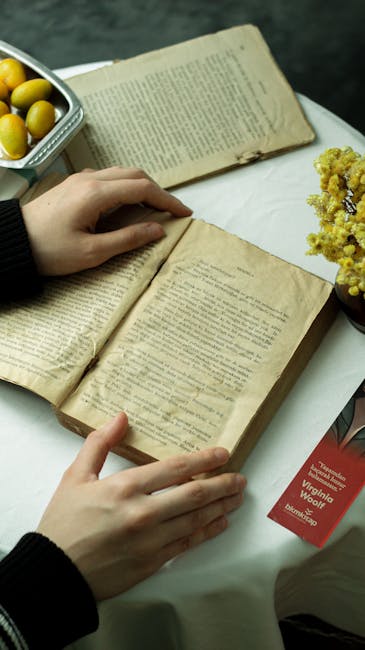
Photo by Viktorija Stankevičiūtė on Pexels
Virginia Woolf, born in 1882, was the seventh child of Leslie Stephen, a renowned literary critic and philosopher. Her early life was marked by a mix of intellectual curiosity and personal turmoil, with the death of her mother and the subsequent mental breakdown of her father. These experiences would later inform her writing, particularly in works like To the Lighthouse, which explores the complexities of family dynamics and the human experience. Woolf's literary background was also shaped by her involvement with the Bloomsbury Group, a circle of intellectuals and artists that included notable figures like E.M. Forster and Lytton Strachey. This association not only influenced her writing style but also instilled in her a sense of artistic experimentation and innovation.
As Woolf herself noted, "A woman must have money and a room of her own if she is to write fiction." This statement not only reflects her own struggles as a female writer but also underscores the importance of independence and creative freedom in her work.
In contrast, James Joyce was born in 1882 in Dublin, Ireland, to a family of modest means. His early life was marked by a strong Catholic upbringing and a passion for literature, which was encouraged by his mother. Joyce's literary background was shaped by his studies at University College Dublin, where he developed a deep appreciation for the works of William Shakespeare, Aristotle, and Thomas Aquinas. These influences are evident in his writing, particularly in Ulysses, which draws heavily on Homer's Odyssey and features a stream-of-consciousness narrative that echoes the philosophical and literary traditions of the past.
The unique experiences and influences that shaped the literary careers of Woolf and Joyce are also reflected in their writing styles. Some of the key aspects of their literary backgrounds include:
Experimentation with narrative forms: Both Woolf and Joyce were known for their innovative approaches to narrative structure, which often featured non-linear storytelling, multiple narrative voices, and a blurring of the lines between reality and fiction.
Emphasis on the human experience: The works of Woolf and Joyce are characterized by a deep concern with the human condition, exploring themes such as identity, morality, and the search for meaning in a rapidly changing world.
Use of symbolism and allusion: Both authors were masters of symbolism and allusion, often incorporating references to mythology, literature, and history into their works to create complex, layered meanings.
By examining the brief biographies and literary backgrounds of Woolf and Joyce, it becomes clear that their unique experiences and influences played a crucial role in shaping their writing styles and thematic concerns. As we delve deeper into their works, it will become apparent that these authors not only reflected the intellectual and artistic currents of their time but also helped to shape the course of modernist literature in profound and lasting ways.
Stylistic Differences: A Comparative Analysis of Woolf's Lyrical Prose and Joyce's Experimental Narrative Techniques
The modernist movement in literature, marked by a departure from traditional narrative structures, is exemplified in the works of Virginia Woolf and James Joyce. Two of the most influential writers of the 20th century, they employed distinct approaches to stream-of-consciousness-lit" class="internal-link text-primary hover:underline font-medium">stream of consciousness, a literary device that seeks to replicate the natural flow of thoughts, feelings, and observations in the human mind. This section will delve into the stylistic differences between Woolf's lyrical prose and Joyce's experimental narrative techniques, exploring how these approaches contribute to the unique characteristics of their works.
Woolf's writing is often described as lyrical, with a poetic quality that permeates her prose. Her use of language is deliberate and evocative, with a focus on capturing the inner lives of her characters. In Mrs. Dalloway, for example, Woolf employs a fluid, unstructured narrative voice that mirrors the natural flow of consciousness. As Clarissa Dalloway prepares to host a party, her thoughts wander through a series of associative leaps, weaving together fragments of memory, observation, and introspection. This is evident in the following passage:
"For Lucy had her work cut out for her. The doors would be taken off their hinges; Rumpelmayer's men were coming."
The use of free indirect discourse, where the narrator's voice blends with the character's thoughts, creates a sense of intimacy and immediacy, drawing the reader into Clarissa's inner world.
In contrast, Joyce's narrative techniques in Ulysses are more radical and experimental. His use of stream of consciousness is characterized by a lack of punctuation, fragmented sentences, and a blurring of the boundaries between different narrative voices. This creates a sense of disorientation and confusion, reflecting the chaos and disorder of modern urban life. As Leopold Bloom navigates the streets of Dublin, his thoughts are presented in a series of unedited, unstructured fragments, mirroring the randomness and unpredictability of his experiences. For example:
"Mr Bloom ate his strips of sandwich, fresh as they were, he and Buck Mulligan and the old woman, with the old woman's cat, and the old woman's canary, and the old woman, and the old woman, and the old woman, and the old woman, and the old woman."
The use of repetition, allusion, and parody adds to the richness and complexity of Joyce's narrative, creating a sense of depth and multiplicity that rewards close reading and interpretation.
The implications of these stylistic differences are significant, reflecting fundamentally different approaches to the nature of human experience and the role of the narrator. Woolf's lyrical prose creates a sense of unity and coherence, emphasizing the interconnectedness of human lives and the importance of individual perspective. In contrast, Joyce's experimental narrative techniques emphasize the fragmentation and dislocation of modern life, highlighting the provisionality and instability of human experience. The following points summarize the key differences between their approaches:
Woolf's use of free indirect discourse creates a sense of intimacy and immediacy, while Joyce's use of stream of consciousness creates a sense of disorientation and confusion.
Woolf's narrative voice is more structured and deliberate, while Joyce's narrative voice is more fluid and experimental.
Woolf's focus on the inner lives of her characters creates a sense of unity and coherence, while Joyce's focus on the external world creates a sense of fragmentation and dislocation.
Ultimately, the stylistic differences between Woolf's lyrical prose and Joyce's experimental narrative techniques reflect fundamentally different visions of human experience and the role of the narrator. While Woolf's approach emphasizes the importance of individual perspective and the interconnectedness of human lives, Joyce's approach highlights the provisionality and instability of modern life. Through their innovative use of stream of consciousness, both writers expand the possibilities of literary expression, creating new modes of narrative that continue to influence and inspire writers today.
Thematic Similarities: Unpacking the Human Condition in Woolf and Joyce
The works of Virginia Woolf and James Joyce are often regarded as seminal examples of modernist literature, characterized by their experimental narrative structures and profound explorations of the human experience. One of the most striking aspects of their writing is the prevalence of common themes, which serve as a testament to the universal concerns and anxieties that define human existence. This section will delve into the thematic similarities between Woolf and Joyce, with a particular focus on their portrayals of the human condition, identity, and the search for meaning.
Both Woolf and Joyce were deeply concerned with the human condition, and their works often grapple with the complexities and mysteries of human existence. In Woolf's Mrs. Dalloway, for example, the character of Septimus Warren Smith serves as a powerful symbol of the human condition, embodying the fragility and vulnerability that define human life. As Woolf writes,
"For it was not knowing what to do with these emotions, these revelations, that made him so uneasy, and so frightened him, for he had not the power to express themthey were too big for him, too difficult, too overwhelming."
Similarly, in Joyce's Ulysses, the character of Leopold Bloom is often overwhelmed by the sheer complexity of human experience, struggling to navigate the mundane routines and existential crises that define his life. As Joyce notes,
"A man's eyes are his windows, and his windows are his eyes; and he who hath no eyes, hath no windows, and he who hath no windows, hath no eyes."
These quotes illustrate the shared concerns of Woolf and Joyce, who both seek to illuminate the intricacies and challenges of human existence.
Another key theme that emerges in the works of Woolf and Joyce is the search for identity and self-definition. In To the Lighthouse, Woolf's protagonist, Lily Briscoe, embarks on a quest to understand herself and her place in the world, grappling with the tensions between her creative aspirations and the societal expectations that constrain her. As Woolf writes,
"For it was not merely a question of painting, but of living, of being alive, of being a part of the world, and not apart from it."
Similarly, in A Portrait of the Artist as a Young Man, Joyce's protagonist, Stephen Dedalus, struggles to define himself as an artist and an individual, seeking to reconcile his Catholic upbringing with his growing sense of independence and self-awareness. As Joyce notes,
"I will not serve that in which I no longer believe, whether it call itself my home, my fatherland, or my church."
These examples demonstrate the shared concerns of Woolf and Joyce, who both explore the complexities and challenges of self-definition in their works.
The search for meaning is another dominant theme in the works of Woolf and Joyce, as their characters often grapple with the existential questions and uncertainties that define human existence. In Ulysses, for example, the character of Stephen Dedalus is obsessed with the concept of artistic expression, seeking to create a work of art that will transcend the limitations of human experience and speak to the universal concerns of humanity. As Joyce writes,
"The artist, like the God of the creation, remains within or behind or beyond or above his handiwork, invisible, refined out of existence, indifferent, paring his fingernails."
Similarly, in Mrs. Dalloway, the character of Clarissa Dalloway is haunted by the search for meaning, seeking to reconcile her own sense of purpose and identity with the fleeting nature of human experience. As Woolf notes,
"For what is the use of a party, or a dinner, or a house, if it is not to make one feel that one is part of something, that one is not alone in the world?"
These quotes illustrate the shared concerns of Woolf and Joyce, who both explore the search for meaning and purpose in their works.
The use of stream-of-consciousness narration in both Woolf and Joyce allows for a deeper exploration of the human condition, revealing the inner thoughts and feelings of their characters in a way that is both intimate and profound.
The emphasis on everyday life and mundane experience in the works of Woolf and Joyce serves to underscore the significance of the ordinary and the mundane, highlighting the ways in which human existence is shaped by the smallest details and routines.
The exploration of identity and self-definition in the works of Woolf and Joyce reveals the complex and often contradictory nature of human identity, highlighting the tensions between creative aspiration and societal expectation, and the search for autonomy and self-awareness.
Ultimately, the works of Woolf and Joyce offer a profound and nuanced exploration of the human condition, one that is marked by a deep sense of empathy and understanding. Through their innovative narrative structures and profound thematic insights, these authors provide a powerful reminder of the complexity and richness of human experience, and the ways in which literature can serve as a powerful tool for self-discovery and exploration.
Photo by Caleb Falkenhagen on Pexels
Character Development Approaches: A Comparative Analysis of Woolf and Joyce
The modernist movement in literature is characterized by its experimental approach to character development, and two of its most prominent figures, Virginia Woolf and James Joyce, are renowned for their innovative techniques in crafting complex, inner-lived characters. One of the most significant tools employed by these authors is the stream of consciousness narrative, which allows readers to delve into the innermost thoughts and feelings of the characters. In this section, we will explore how Woolf and Joyce utilize stream of consciousness to shape their characters' experiences and create a deeper understanding of their inner lives.
Woolf's use of stream of consciousness in novels such as Mrs. Dalloway and To the Lighthouse is notable for its fluid, poetic quality, which mirrors the natural flow of human thought. Through this technique, Woolf is able to capture the ephemeral nature of human experience, revealing the inner lives of her characters in all their complexity. For example, in Mrs. Dalloway, the character of Clarissa Dalloway is introduced through a stream of consciousness passage that vividly conveys her thoughts, feelings, and sensations as she prepares to host a party:
What a lark! What a plunge! For so it had always seemed to her, when, with a little squeak of the hinges, which she could hear now, she had burst open the French windows and plunged at Bourton into the open air.
This passage illustrates Woolf's mastery of stream of consciousness, as she seamlessly weaves together Clarissa's thoughts, memories, and perceptions to create a rich, immersive portrait of her character.
In contrast, Joyce's use of stream of consciousness in works such as Ulysses and Finnegans Wake is often more fragmented and disjunctive, reflecting the disjointed nature of human thought. Joyce's characters, such as Leopold Bloom and Stephen Dedalus, are often portrayed as being in a state of flux, their thoughts and feelings in constant motion. For instance, in Ulysses, Bloom's stream of consciousness is characterized by its meandering, associative quality, as he wanders through Dublin and reflects on his experiences:
Wait, wait: that wine shop in Duke street: I bought a bottle of white Bordeaux for Molly: it was expensive: I stuck it in my boot: she'll throw it out: that's the way to get around her: buy her something: wine: she likes wine.
This passage demonstrates Joyce's innovative use of stream of consciousness to capture the fluid, often chaotic nature of human thought, and to reveal the inner lives of his characters in all their complexity.
Despite their differences in approach, both Woolf and Joyce use stream of consciousness to create a sense of intimacy and immediacy with their characters, drawing the reader into the inner world of the character's thoughts, feelings, and sensations. This is achieved through a range of techniques, including:
The use of free indirect discourse, which allows the reader to experience the character's thoughts and feelings directly
The employment of vivid, descriptive language, which creates a rich, sensory portrait of the character's inner life
The manipulation of narrative time and space, which allows the reader to move fluidly through the character's thoughts and memories
The incorporation of multiple narrative voices and perspectives, which creates a complex, multifaceted portrait of the character's inner life
Through these techniques, Woolf and Joyce are able to craft characters that are at once deeply human and profoundly complex, inviting the reader to engage with their inner lives in a way that is both deeply intimate and profoundly revelatory. As we will see in the following sections, the use of stream of consciousness is just one aspect of the authors' innovative approaches to character development, and one that has had a lasting impact on the literary landscape.
Impact and Legacy: The Enduring Influence of Woolf and Joyce on 20th-Century Literature
The literary landscape of the 20th century was profoundly shaped by the innovative and groundbreaking works of Virginia Woolf and James Joyce. Their experimental approaches to narrative, character development, and language have had a lasting impact on the literary canon, influencing generations of writers and continuing to resonate with contemporary readers. The significance of their contributions can be seen in the way they expanded the possibilities of literary expression, pushing the boundaries of traditional storytelling and exploring new modes of representation.
One of the most significant aspects of Woolf and Joyce's legacy is their emphasis on the subjective experience and the inner lives of their characters. In works like Woolf's Mrs. Dalloway and Joyce's Ulysses, the authors employ stream-of-consciousness narration to create a sense of immediacy and intimacy, drawing the reader into the inner worlds of their characters. This technique, which was revolutionary for its time, has become a staple of modernist and postmodernist literature, influencing authors such as Samuel Beckett, William Faulkner, and Don DeLillo. As
Woolf herself noted, "the mind is a very powerful and mysterious thing, and it can do a great many things that we do not understand"
, highlighting the importance of exploring the human psyche in literary works.
The impact of Woolf and Joyce can also be seen in the way they challenged traditional notions of time, space, and narrative structure. Joyce's use of non-linear narrative in Ulysses, for example, has been particularly influential, inspiring authors like Thomas Pynchon and David Mitchell to experiment with non-traditional narrative forms. Similarly, Woolf's use of fluid, poetic language in works like The Waves has influenced a wide range of authors, from T.S. Eliot to Toni Morrison. Some key aspects of their influence include:
The use of non-linear narrative structures, which allow for a more flexible and dynamic approach to storytelling
The emphasis on the subjective experience and the inner lives of characters, which creates a sense of intimacy and immediacy
The experimentation with language and form, which has led to a wide range of innovative and avant-garde literary styles
The challenge to traditional notions of time and space, which has allowed authors to explore new modes of representation and expression
Today, the works of Woolf and Joyce continue to be widely studied and admired, offering insights into the human condition, the nature of identity, and the power of language to shape our perceptions of the world. Their influence can be seen in a wide range of literary and cultural productions, from literature and film to art and music. As we continue to navigate the complexities of the 21st century, the innovative and groundbreaking works of Woolf and Joyce remain a powerful reminder of the enduring importance of literary experimentation and innovation.
Conclusion: The Timeless Relevance of Woolf and Joyce's Innovative Narratives
In conclusion, the comparative analysis of Virginia Woolf and James Joyce's works reveals a profound synergy between their innovative narrative techniques and enduring themes. Through their bold experimentation with non-linear narrative structures, stream-of-consciousness, and modernist storytelling, both authors have left an indelible mark on the literary landscape. As we reflect on their oeuvres, it becomes evident that their pioneering approaches to storytelling have not only withstood the test of time but continue to influence contemporary writers and artists.
Woolf's use of lyrical prose and fluid narrative voice, as seen in Mrs. Dalloway, masterfully captures the human experience, while Joyce's employment of free indirect discourse in Ulysses revolutionized the way authors represent the inner lives of their characters. These techniques, once deemed radical and avant-garde, have become staples of modern literature, allowing readers to immerse themselves in the innermost thoughts and emotions of characters. As
Woolf herself noted, "the writer's task is to get the whole of human life into his net,"
and it is through their innovative narrative techniques that both authors have achieved this lofty goal.
Their works also explore profound themes that remain pertinent today, including the search for identity, the human condition, and the role of memory in shaping our understanding of ourselves and the world around us. Some of the key areas where their works converge and diverge include:
The representation of time and space, with Woolf's fluid, non-linear narrative and Joyce's more structured, episodic approach
The exploration of the human psyche, with both authors delving into the inner lives of their characters, but Woolf focusing on the emotional and intuitive, while Joyce examines the rational and intellectual
The use of language and symbolism, with both authors employing rich, allusive language, but Joyce's work often incorporating more overt symbolism and allusion
Ultimately, the comparison between Woolf and Joyce serves as a testament to the enduring power of literature to capture the complexity and richness of human experience. As we continue to navigate the complexities of the modern world, their innovative narrative techniques and profound themes offer a profound reminder of the importance of empathy, self-reflection, and the pursuit of meaning in our lives.