Tanzania's Tourism Boom

Share this article
Help others discover this article by sharing it
Tanzania, a country known for its vast wilderness and diverse wildlife, is facing a critical issue that threatens the very existence of its indigenous people. The Tanzanian government's efforts to boost tourism by creating new reserves have led to the displacement of local communities, sparking a heated debate over land use and conservation. As we delve into this complex issue, we are reminded of the words of renowned author, George Orwell, who once said, "If liberty means anything at all, it means the right to tell people what they do not want to hear." The plight of the Maasai people, who have been evicted from their ancestral land to accommodate tourism projects, is a stark reminder of the need to balance economic development with social and environmental responsibility.
- Tourism is a significant contributor to Tanzania's economy, accounting for a substantial portion of the country's GDP.
- The Maasai people, in particular, have been affected by these evictions, which have driven them to the brink of poverty and displacement.
- As Chinua Achebe once wrote, "The trouble with Nigeria is that there is a lot of unnecessary motion, a lot of noise, but little progress.
- However, the benefits of tourism have not been evenly distributed, with local communities often bearing the brunt of the negative impacts.
- The establishment of new reserves has been seen as a positive step towards conservation, but it has also led to the displacement of local communities.
Introduction to the Land Dispute
The Tanzanian government's decision to create new reserves has been met with resistance from local communities, who claim that their ancestral land is being taken away without their consent. The Maasai people, in particular, have been affected by these evictions, which have driven them to the brink of poverty and displacement. As Chinua Achebe once wrote, "The trouble with Nigeria is that there is a lot of unnecessary motion, a lot of noise, but little progress." Similarly, the situation in Tanzania is marked by a lack of progress in addressing the concerns of local communities, who are fighting to protect their land and way of life.
Causes of the Dispute - Lack of consultation with local communities
- Insufficient compensation for displaced families
- Failure to provide alternative livelihoods for affected communities
"The earth has music for those who listen," said William Shakespeare. However, the music of the earth is being disrupted by the sounds of conflict and displacement in Tanzania.
The Impact of Tourism on Local Communities
Tourism is a significant contributor to Tanzania's economy, accounting for a substantial portion of the country's GDP. However, the benefits of tourism have not been evenly distributed, with local communities often bearing the brunt of the negative impacts. The environmental degradation caused by tourism, including the destruction of habitats and the pollution of water sources, has further exacerbated the displacement of local communities. As Jane Austen once wrote, "It is a truth universally acknowledged, that a single man in possession of a good fortune, must be in want of a wife." Similarly, it is a truth universally acknowledged that a country in possession of a rich cultural heritage and natural resources, must be in want of sustainable tourism practices.
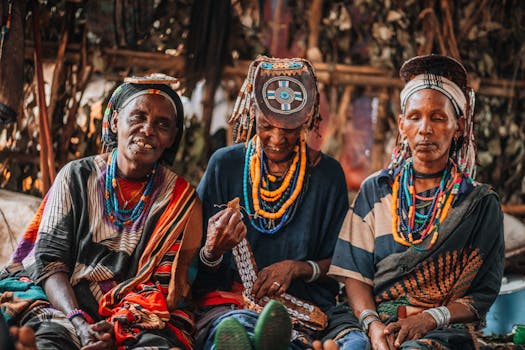
Effects of Displacement on Local Communities - Loss of traditional livelihoods and cultural practices
- Increased poverty and vulnerability
- Disruption of social structures and community cohesion
Wildlife Conservation Efforts
The Tanzanian government's efforts to conserve wildlife and promote tourism are commendable, but they must be balanced with the need to protect the rights of local communities. The establishment of new reserves has been seen as a positive step towards conservation, but it has also led to the displacement of local communities. As Henry David Thoreau once said, "In wildness is the preservation of the world." However, the preservation of the world's wild places must not come at the cost of the people who have lived in harmony with nature for centuries.
Challenges and Opportunities - Balancing conservation with community development
- Providing alternative livelihoods for displaced communities
- Ensuring that tourism benefits are shared equitably
"The world is a book, and those who do not travel read only one page," said Saint Augustine. However, the world is not just a book, but a complex web of relationships between people, places, and the environment. As we travel and explore the world, we must also be mindful of the impact of our actions on local communities and the environment.
Conclusion and Call to Action
In conclusion, the dispute over land use in Tanzania is a complex issue that requires a nuanced and multifaceted approach. The Tanzanian government must balance the need to promote tourism and conserve wildlife with the need to protect the rights of local communities. As Nelson Mandela once said, "The greatest glory in living lies not in never falling, but in rising every time we fall." It is time for the Tanzanian government to rise to the challenge of addressing the concerns of local communities and finding a solution that benefits all stakeholders. We must also recognize the importance of African land rights and the need to protect the cultural heritage and traditional practices of indigenous communities. By working together, we can find a solution that promotes wildlife conservation efforts and tourism impact communities in a way that is equitable and sustainable.
Final Thoughts
As we reflect on the situation in Tanzania, we are reminded of the importance of responsible tourism practices and the need to prioritize the well-being of local communities. The Tanzania land dispute is a stark reminder of the need to balance economic development with social and environmental responsibility. As we move forward, we must prioritize the protection of indigenous people evictions and the preservation of their cultural heritage. By doing so, we can ensure that the benefits of tourism are shared equitably and that the negative impacts are mitigated. The tourism impact communities in Tanzania is a complex issue, but by working together, we can find a solution that promotes sustainable tourism practices and respects the rights of local communities.
📖 Books Mentioned in This Article
📚 Related Articles
Tanzania's Fishing Industry Struggles
Tanzania's small-scale fishing crews are facing significant challenges due to the modernization of the fishing industry. The introduction of large-scale commercial fishing has led to a decline in traditional fishing practices, making it difficult for local communities to sustain themselves. Discover how fishing modernization affects Tanzania's small-scale fishing crews and the environment, and what can be done to promote sustainability
Tails of Devotion
Exploring the human-canine bond in literature, from Homer to modern novels, and the ways in which dogs illuminate the human condition.
Love & Family Ties
Exploring family dynamics through literature, from Shakespeare to Austen, reflecting on love, parenthood, and societal influences.
Literary Lens: Celeb Relationships
A literary analysis of celebrity relationships through the lens of classic works